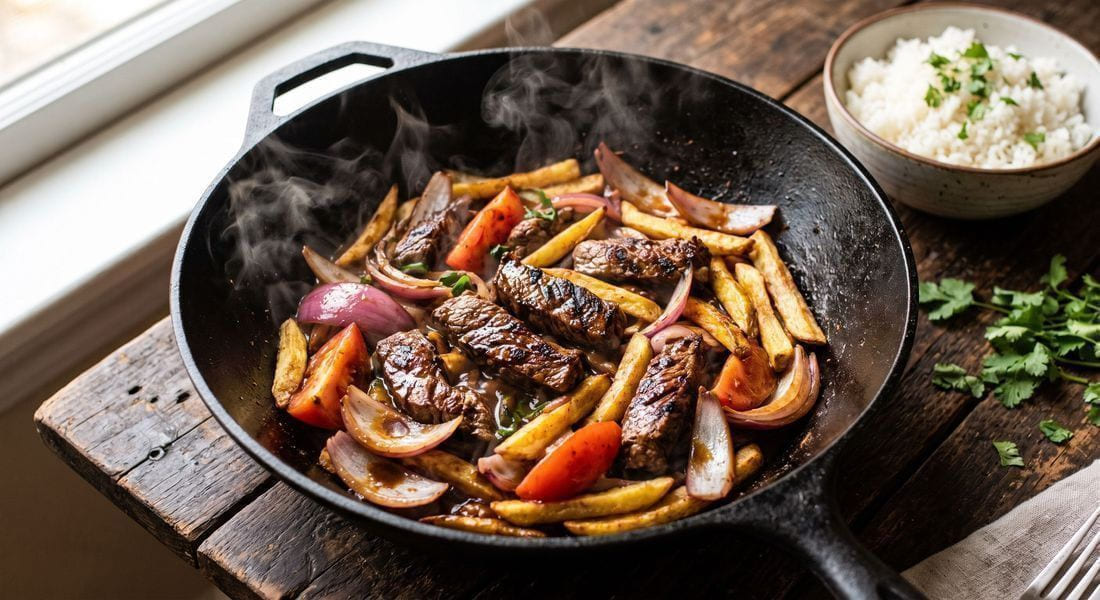
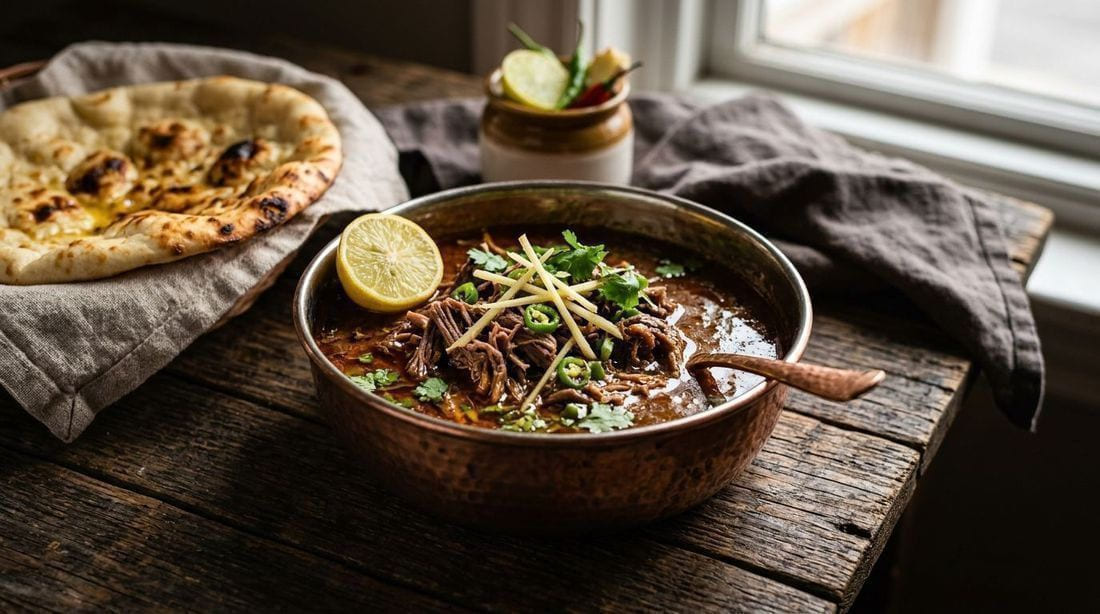
Lomo saltado is Peru on a plate — the dish that happens when a Chinese wok meets the Andes. It belongs to chifa, the Chinese-Peruvian kitchen that has been blending soy sauce with ají chiles since the 1800s, and it shows up on every Lima menu from hole-in-the-wall picanterías to white-tablecloth restaurants. The idea is beautifully simple: beef seared hard in a screaming-hot wok, then tossed with red onions, juicy tomatoes, and a savory sauce built on soy sauce and vinegar with the fruity heat of ají amarillo. And then the part that surprises everyone: french fries tumble right into the stir-fry at the end, soaking up just enough sauce while staying crisp, and the whole thing is served over white rice — carbs on carbs, exactly the way Lima wants it. At home it comes together in 30 minutes: ten of them are the marinade, and the stir-fry itself is five minutes of heat and nerve. If you have ever hesitated to cook Peruvian food, this is the one to start with — it is easier than its flavor suggests.
1 1/4 lb (565 g) beef sirloin or tenderloin, cut into thick 1/2-inch (1.2 cm) strips against the grain
2 tablespoons soy sauce (for the marinade)
2 cloves garlic, minced (for the marinade)
1 tablespoon neutral oil (for the marinade)
1/2 teaspoon ground cumin
4 tablespoons soy sauce (for the sauce)
1 1/2 tablespoons red wine vinegar
2 teaspoons ají amarillo paste (or substitute — see FAQ)
3 tablespoons neutral oil, divided (for the wok)
1 large red onion, cut into thick wedges
2 Roma tomatoes, cut into thick wedges
4 cups frozen french fries (or freshly cut), baked or air-fried until crisp
3 cups hot cooked white rice, for serving
Fresh cilantro leaves, for garnish (optional)
Salt and black pepper, to taste
Instructions
Marinate the beef: toss the beef strips with 2 tablespoons soy sauce, the garlic, 1 tablespoon oil, and the cumin in a bowl. Let it sit 10 minutes while you start the fries — long enough for the soy to season deep, not so long that it cures the surface.
Cook the fries: bake or air-fry the fries at 425°F (220°C) until deeply crisp, about 15–20 minutes from frozen. They need to hold their own against the sauce, so err on the darker, crisper side.
Mix the sauce: whisk 4 tablespoons soy sauce, the red wine vinegar, and the ají amarillo paste in a small bowl until combined. Set it by the stove — the stir-fry moves fast.
Sear the beef: heat 2 tablespoons oil in a wok or large heavy skillet over the highest heat your stove gives. Pat the beef strips dry, add them in a single layer, and sear undisturbed 60–90 seconds until browned underneath, then stir-fry 1–2 minutes more until browned on all sides and just cooked through. Transfer to a plate — do not wipe the wok.
Wok the vegetables: add the last tablespoon of oil to the hot wok, then the red onion. Stir-fry 2 minutes until the edges char and the wedges soften but still have bite. Add the tomato wedges and cook 60–90 seconds more — you want them warmed through and releasing juice, not collapsed.
Bring it together: return the beef and any collected juices to the wok, pour in the sauce, and toss constantly for about 1 minute as it bubbles and glazes everything. Taste — it should be savory, tangy, and just a little fruity-hot; adjust with a splash more vinegar or a pinch of salt.
Fries in, serve hot: add the hot fries to the wok and toss gently 20–30 seconds so they catch the sauce without going soft. Pile over steamed white rice, scatter cilantro over the top, and serve immediately — lomo saltado waits for no one.
Tips for Success
Heat is the whole technique. Lomo saltado is defined by wok breath — that smoky, seared flavor you only get from a very hot pan and beef in a single layer. If your wok or skillet is small, sear the beef in two batches; crowded beef steams gray and releases the juices that should be staying in the meat.
The fries go in at the very end, and only for 30 seconds. This is the signature move — fries that absorbed the sauce but kept their crunch. Add them too early and you get soggy potato (still tasty, but not lomo saltado); bake them darker than feels comfortable to buy them insurance.
Season late and lightly. The soy sauce in the marinade and the sauce carry most of the salt — taste before adding any at all. The tomatoes and vinegar bring the brightness, and a final splash of vinegar at the table is what Lima cooks do when a batch tastes flat.
Perfect pairings
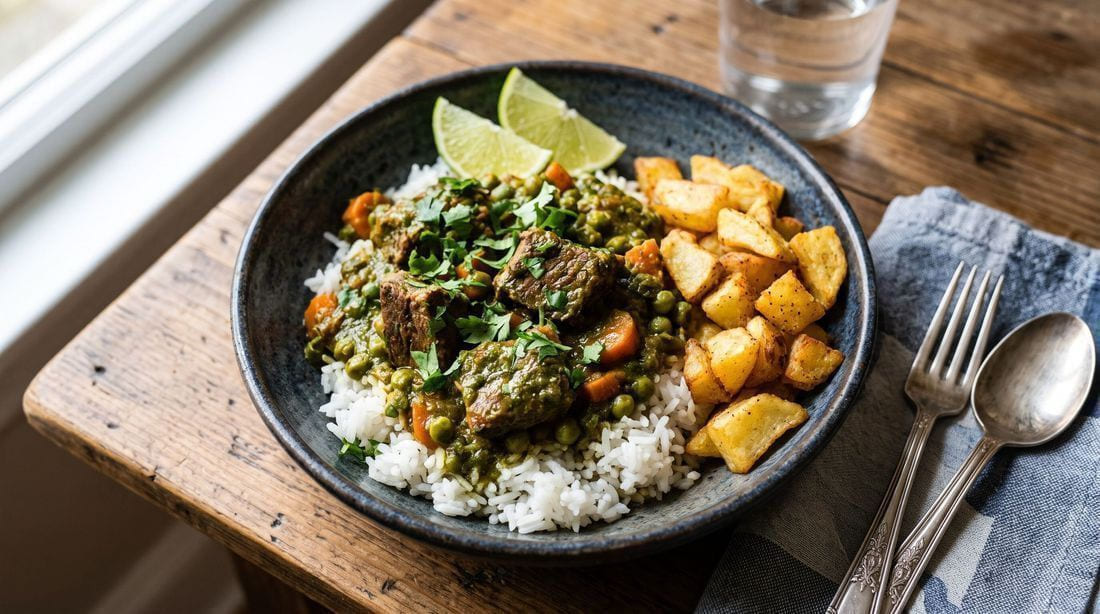
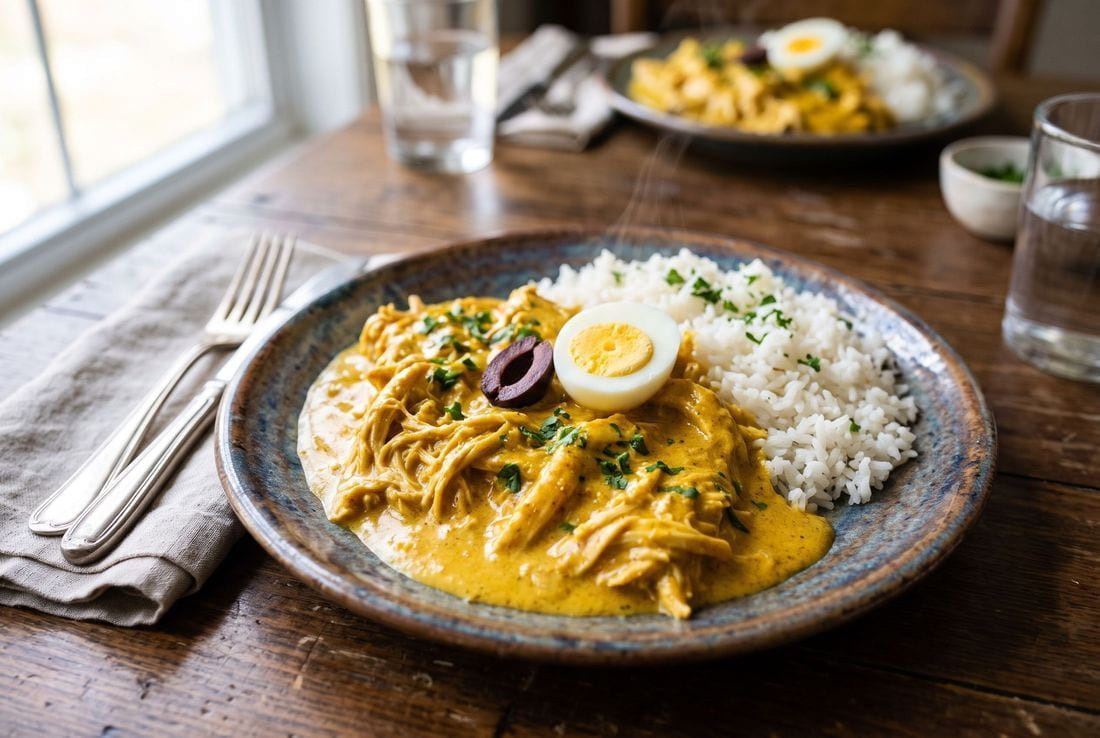
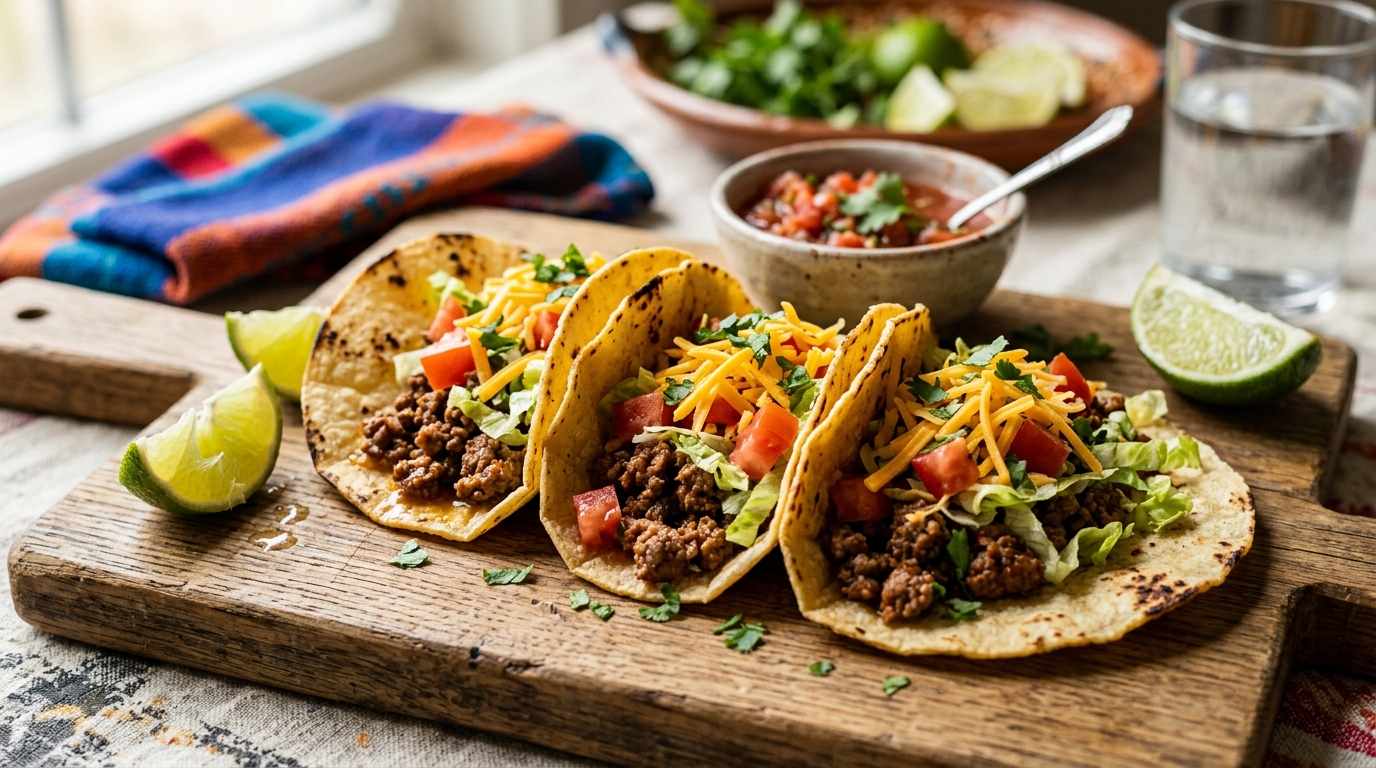
Lomo saltado opens the chifa lane — round out the big-flavor table with a slow braise, a taco night, or a one-pot chili.
Ají amarillo is the fruity, medium-hot Peruvian chile that defines the dish, and Latin markets sell it as a paste. The closest home substitute is a blend of one part hot chile paste (sriracha or habanero paste for the heat) and one part mild yellow chile or roasted bell pepper paste for the fruitiness, plus a tiny pinch of turmeric to nudge the color. Do not skip the heat entirely — the dish leans on it — but keep it moderate; lomo saltado is warming, not brutal.
What is the best cut of beef for lomo saltado?
Sirloin is the classic and the sweet spot: enough fat and chew to stay juicy in a 3-minute wok blast, cheap enough for a weeknight. Tenderloin is the splurge (extra tender, sears even faster — pull it sooner). Flat iron or flap steak also work well. Avoid stewing cuts like chuck — they need long braising and will turn this stir-fry into chewing practice. Always cut across the grain into thick strips so the pieces stay juicy.
Why did my fries turn soggy in the stir-fry?
Two usual causes: the fries went in too early, or they were not crisp enough to begin with. Fries only belong in the wok for the last 20–30 seconds, after the heat is off or nearly off — long enough to catch the sauce glaze, not so long that they steam. And bake or air-fry them darker than you think: deeply crisp fries survive the toss. Skipping the wok entirely and scattering the fries on top of each plate is the Lima street-food move and always works.
Can I make lomo saltado ahead of time?
Partially, and that is the smart way. Marinate the beef up to 24 hours ahead, mix the sauce (it keeps a week in the fridge), bake the fries up to an hour ahead and re-crisp them in a hot oven or air fryer for 5 minutes, and cook the rice ahead. But stir-fry the beef and vegetables à la minute — the whole dish takes 5 minutes at the stove, and it is the contrast between hot seared beef and crisp fries that makes it. Assembled lomo saltado does not wait well.
How do I store and reheat leftover lomo saltado?
Refrigerate the beef-and-vegetable stir-fry separately from any surviving fries in airtight containers for up to 3 days. Reheat the stir-fry in a hot skillet for 2–3 minutes (the microwave works but steams the beef soft), and re-crisp the fries at 425°F for 5 minutes before tossing them in. Leftover lomo saltado over fried rice the next day is a legitimate Lima lunch in its own right.
Do I have to serve lomo saltado with both rice and fries?
Both, ideally — the double carb is not an accident, it is the chifa signature, and in Lima the fries are the point while the rice is the bed. That said, the dish flexes: quinoa or fried yuca instead of fries works beautifully, and if you want it lighter, skip the rice and pile the stir-fry over a bigger portion of fries with a simple green salad alongside. Whatever you choose, serve it immediately — this dish is built on temperature contrast.
Affiliate disclosure: this page contains affiliate links. If you buy equipment through them, Cuisinety earns a small commission at no extra cost to you — it keeps the site free. Picks follow the same research-backed standards as our gear guides. Read ourfull affiliate disclosure.