Journal · Trending · By Karim
The Science Behind Browning and Why It Improves Every Dish
How the Maillard reaction and caramelization actually work, why moisture blocks browning, and the practical fixes for deeper flavor in every sear and roast.
 cuisinety
Journal · Trending · By Karim
How the Maillard reaction and caramelization actually work, why moisture blocks browning, and the practical fixes for deeper flavor in every sear and roast.
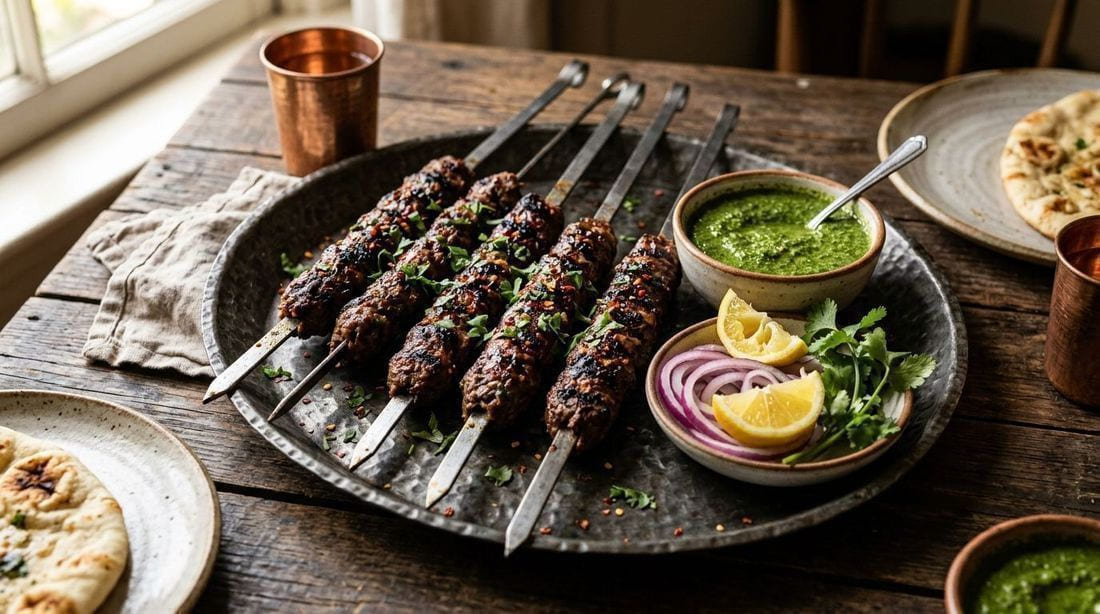
Almost everything delicious about a dark crust — the edge of a seared steak, the bronzed top of a roast chicken, the toasted bottom of a flatbread — comes from browning. But there are actually two different chemical reactions hiding under that one word, and knowing which one you are triggering at any moment is the difference between deep flavor and acrid disappointment.
The first is the Maillard reaction, named for the French chemist Louis-Camille Maillard, and it is a reaction between amino acids (from proteins) and reducing sugars under heat. It is the browning of proteins and starches: meat crusts, bread crusts, the golden surface of fried chicken. The second is caramelization, which is sugar breaking down on its own, no proteins involved — the golden edge of a honey glaze, the amber depths of deeply cooked onions, the crackly top of a flan.
The flavors they produce are related but distinct: Maillard brings savory, roasted, meaty, nutty notes; caramelization brings sweet, nutty, butterscotch notes. Great cooking usually gets both, layer by layer — a seared chop finished in a sweet glaze, onions cooked past gold into brown, a braise built on well-crusted meat. Understanding where each reaction kicks in tells you how to aim for them instead of hoping.
The Maillard reaction becomes noticeable around 285 F (140 C) and really gets moving above 300 F (150 C). That single number explains half of all searing failures. Water boils at 212 F (100 C), and as long as there is surface moisture, the pan energy goes into boiling it off and the food surface is pinned at or near boiling temperature — well below the Maillard threshold. A wet steak in a hot pan does not brown; it steams, greys, and leaks.
Caramelization runs hotter and varies by sugar: fructose starts around 230 F (110 C), sucrose around 320 F (160 C), glucose around 300 F (150 C). This is why honey and high-fructose glazes burn fast — they are already past their caramelization point by the time most ovens are fully hot — and why table sugar syrups take patience. It also explains the slow-cooked onion: the natural sugars in an onion only caramelize properly once the water has cooked off, which is why the honest process takes 30 to 45 minutes, not the 10 minutes many recipes claim.
Two thresholds protect you on the other side, too. Cooking oil begins to smoke and break down past its smoke point, and above roughly 350 to 400 F depending on the oil, the Maillard products start sliding from delicious toward bitter. Browning is not a maximum-heat contest; it is a window. Your job is to get the surface into the window fast and pull it out before it drifts past the far end.
If you take one operational rule from the science, make it this: browning needs a dry surface and a hot, uncrowded pan. Every fix that follows is a version of removing water from the equation. Meat straight from the package sits in its own juices; vegetables after rinsing carry a film of water; even tofu pressed carelessly holds enough moisture to steam instead of sear.
Patting protein dry with paper towels takes ten seconds and changes everything — the drier the surface, the faster it climbs past 212 F and into Maillard territory. For thin cuts and anything you want truly crusty, dry-brining goes further: salt the surface and leave it uncovered in the fridge for a few hours or overnight. The salt draws out moisture, then the fridge air takes it away, leaving a surface that sears like a dream and seasons the meat all the way through.
Crowding is the quieter killer. Every cold, wet piece you drop into a pan drops the surface temperature, and six steaks in one skillet release enough juice to poach the whole batch. The fix is spacing and batching: leave an inch between pieces and cook in two rounds rather than one crowded one. Yes, the first batch keeps warm under foil while the second sears, and yes, it is worth it. The same math explains why sheet-pan dinners that pile vegetables into a mound come out pale — spread them in a single layer with breathing room and they roast brown instead of sweating grey. Try that contrast once with the same vegetable and you will never crowd a pan again.
Fat matters to browning for a physical reason before a flavor one: it makes full contact between food surface and hot metal. A dry steak on a dry pan touches the metal only at its high points, and those contact patches burn while the rest stays pale. A thin film of oil conducts heat evenly across every curve, which is why even well-seasoned cast iron gets a spoonful of oil for searing.
Then comes the smoke point ceiling. Butter burns around 300 to 350 F because of its milk solids — right where Maillard begins — which is why butter alone is a poor searing fat. Clarified butter or ghee, with the solids removed, handles 400 F-plus and gives you the butter flavor without the black specks. Neutral oils with high smoke points — canola, grapeseed, refined olive — are workhorses for high-heat searing. Extra-virgin olive oil smokes in the 375 to 400 F range, which is fine for roasting vegetables at 425 F but marginal for ripping-hot skillet work.
The professional trick is sequencing rather than choosing: sear in a high-smoke-point oil, then add butter partway through and baste. The butter's milk solids brown quickly and coat the food in nutty flavor, but because it goes in near the end, it never gets the chance to burn. That single move — hot oil for the crust, butter for the finish — is most of what restaurant-seared meat does differently from home-seared.
After a good sear, the brown crust stuck to the pan has a name: the fond. It is a concentrate of everything the Maillard reaction produced, dissolved into the residue on the metal, and it is the base of more great sauces than any ingredient you can buy. Scraping it into the trash after searing is throwing away the most flavor-dense thing in the dish.
Rescue is simple: deglaze. With the pan off high heat, pour in a splash of liquid — wine, stock, water, even the tomato that comes next in the recipe — and scrape with a wooden spoon or spatula as it bubbles. The fond dissolves into the liquid and you have a pan sauce base in ninety seconds. In practice, most braises and curries already do this implicitly: the recipe that says add the onions to the same pot is quietly asking you to cook them in and scrape up the fond left by the sear.
This is the engine behind several dishes on this site. Chicken karahi gets its depth from searing chicken in the same pot the tomato-ginger masala then deglazes. Beef and broccoli depends on a hard sear on the beef, with the sauce built to pick up the crusty bits. Even a paella's much-prized socarrat — the caramelized rice crust on the pan bottom — is fond, deliberately cultivated. Once you see fond as an ingredient, you stop scrubbing it away and start planning around it.
Some ingredients sit inside the browning window with almost no margin, and the difference between golden and ruined is measured in seconds. Garlic is the famous case: its fine pieces and high sugar content take it from fragrant to bitter in under a minute over high heat, which is why nearly every recipe sequence adds garlic after the onions have softened. Butter's milk solids burn even faster. Ground spices bloom beautifully in hot fat for thirty seconds and turn acrid in ninety.
That does not mean these ingredients avoid browning — it means they brown on their own schedule, usually gentler heat and constant motion. Bloom paprika or cumin in the oil off direct high heat, as Moroccan cooking does when building a tagine base, and you get the toasted depth without the bitterness. Toast nuts and seeds in a dry pan over medium, watching, not walking away.
For everything else, the question is how much browning the dish wants. Braises, chilies, and stews want a hard sear first — that crust is the backbone of the final flavor, which is why a chili con carne or beef stew built on browned meat tastes categorically different from one made by browning nothing. Delicate fish wants moderate color, quickly. Dairy-based sauces want none at all. And some browning happens on purpose outside the pan: the char on grilled seekh kebab, the blistered skin of chicken tikka fresh from the heat, the crackle of a proper wiener schnitzel. Browning is not a step; it is a dial you set per dish.
Diagnosing a browning failure is easier when you know the causes. Pale, gray meat: the pan was too cool, the surface was wet, or the pan was crowded — preheat longer, pat drier, batch smaller. Burnt outside, raw inside: the heat was too high for the thickness — finish thick cuts in a 350 F oven after the crust forms, or butterfly them thinner. Charred spots on vegetables: the pan had hot spots or the pieces were uneven — cut uniform sizes and toss halfway through. Everything steamed instead of seared: too much food, too much moisture, or a lid left on — lids trap exactly the water browning needs gone.
A few upgrades compound these fixes. A cast-iron or heavy carbon-steel pan holds heat far better than thin nonstick and makes consistent searing dramatically easier. An instant-read thermometer removes guesswork: pull chicken at 160 to 165 F in the thickest part, and let steak coast to its final temperature off heat. And dusting thin cuts lightly with flour before searing — the schnitzel principle — creates a dry, starchy surface that browns fast and even.
One habit ties it all together: brown in stages, on purpose. Sear the protein and set it aside, let the pan cool slightly, then build the aromatics and sauce in the fond it left behind. You get a crust, a sauce, and a cleaner kitchen from the same pan. Once browning stops being an accident, you will find yourself engineering it into everything — the crust on a roast chicken, the color under a batch of carnitas, the dark edges on a tray of roasted vegetables — and every dish on the table gets better for it.
These recipes pair with this article — make them tonight:
Advertisement