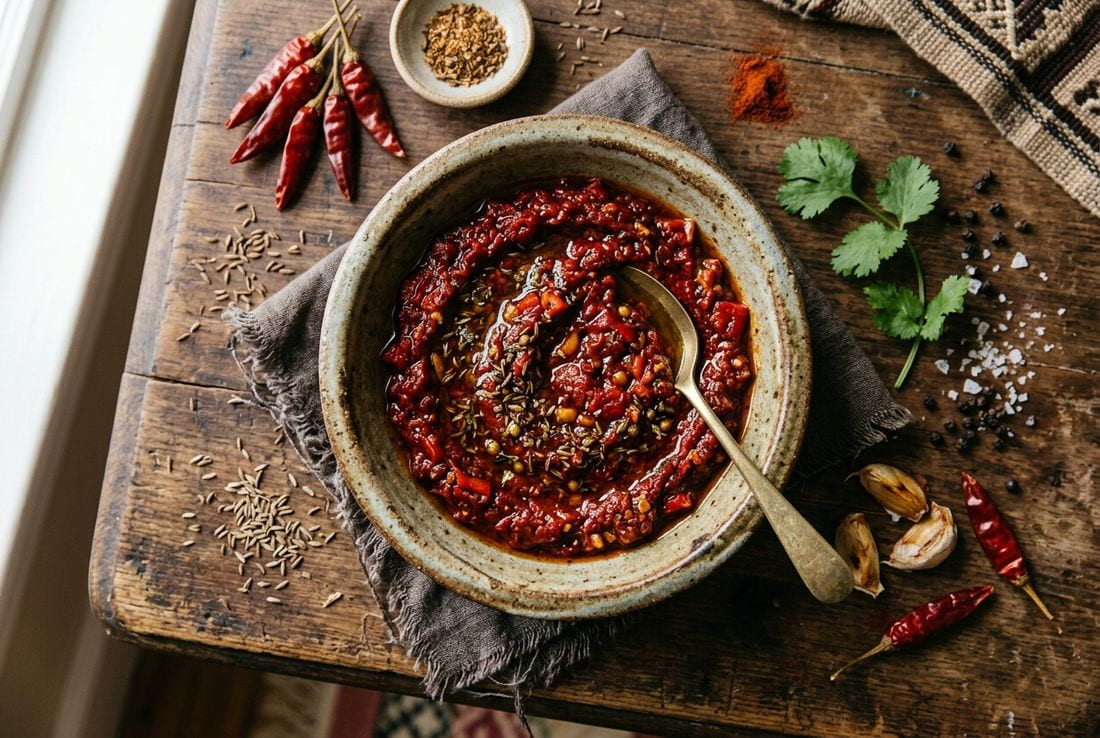
What harissa actually is
Harissa is a North African chili paste built from roasted red peppers, dried chilies, garlic, and a warm spice blend — caraway, coriander, cumin — held together with olive oil. It is not just heat. The roasted pepper base gives it a sweet, smoky depth, and the spices make it aromatic in a way that plain chili paste never is.
Morocco and Tunisia both claim it, and the friendly argument is visible in every jar: Tunisian harissa is usually hotter and looser, Moroccan harissa is more of a thick, smokier paste. Both are a gift to weeknight cooking because a spoonful does the work of ten ingredients.
How to use it: the eleven ways
Stir a spoonful into a tagine's sauce or a pot of chickpeas. Whisk it into yogurt for a cooling dip that earns its place at any table. Rub it on chicken or fish before roasting — it doubles as a marinade and a crust. Thin it with olive oil and lemon for a dressing. Melt a little into butter and toss it through couscous or rice. Add it to eggs, whether scrambled, baked shakshuka-style, or folded into an omelet.
From there it's a domino effect: harissa mayo for sandwiches, harissa hummus, harissa roasted vegetables tossed in before the oven, harissa tomato soup for the flavor base, and — the sleeper hit — a small spoonful stirred into mayonnaise or aioli for burgers. That's eleven without trying hard, and the jar keeps for months under a layer of olive oil.
Start with the classics
If you have never cooked with harissa, start where the paste is native: a tagine. Our 5-ingredient Moroccan tagine is the perfect first meeting — garlic, onion, olives, preserved lemon, and a spoonful of harissa doing the heavy lifting. Kefta tagine with eggs turns spiced meatballs and a harissa-tomato sauce into a one-pot dinner, and the fish tagine with chermoula shows how the paste works with seafood.
And don't skip the breakfast route: shakshuka with a teaspoon of harissa stirred into the tomato base is how a lot of Moroccan households actually eat it.