Marinate: whisk the orange juice, lime juice, soy sauce, 2 tablespoons of the oil, garlic, jalapeño, cumin, oregano, and black pepper in a non-reactive dish. Add the steak, turn to coat every surface, and marinate in the fridge for 2–4 hours — long enough for the flavor to season the meat, short enough that the citrus never turns the surface chalky. Turn the steak once halfway through.
Dry the steak: pull the steak out of the marinade 30–40 minutes before grilling (cold steak never sears well) and pat it thoroughly dry with paper towels. Reserve the marinade. Dry surface is the difference between a sear and a steam — do not skip this step.
Boil the marinade: pour the used marinade into a small saucepan, bring it to a rolling boil, and boil for 5 minutes to make it safe, then reduce it to a thick, spoon-coating glaze. This is your finishing sauce — a warm, citrus-garlic lacquer that no restaurant bottle can match.
Fire the grill: heat a gas grill or charcoal grill to high — 450–500°F, one hot zone. If the grill is too hot to hold your hand 4 inches above the grate for more than 2 seconds, it is ready. Clean the grates well and oil them lightly.
Grill: lay the steaks on the hot grate with an inch of space between them and do not move them for 3–4 minutes — you want the grate to do the work, not the spatula. Flip once and grill 3–4 minutes more for medium-rare (130–135°F internal) or 4–5 for medium (140–145°F). Skirt steak is thin; the whole cook takes 6–10 minutes.
Rest: transfer the steak to a cutting board and let it rest 8–10 minutes, tented loosely with foil. The juices need to redistribute; slicing early is the one mistake that cannot be fixed.
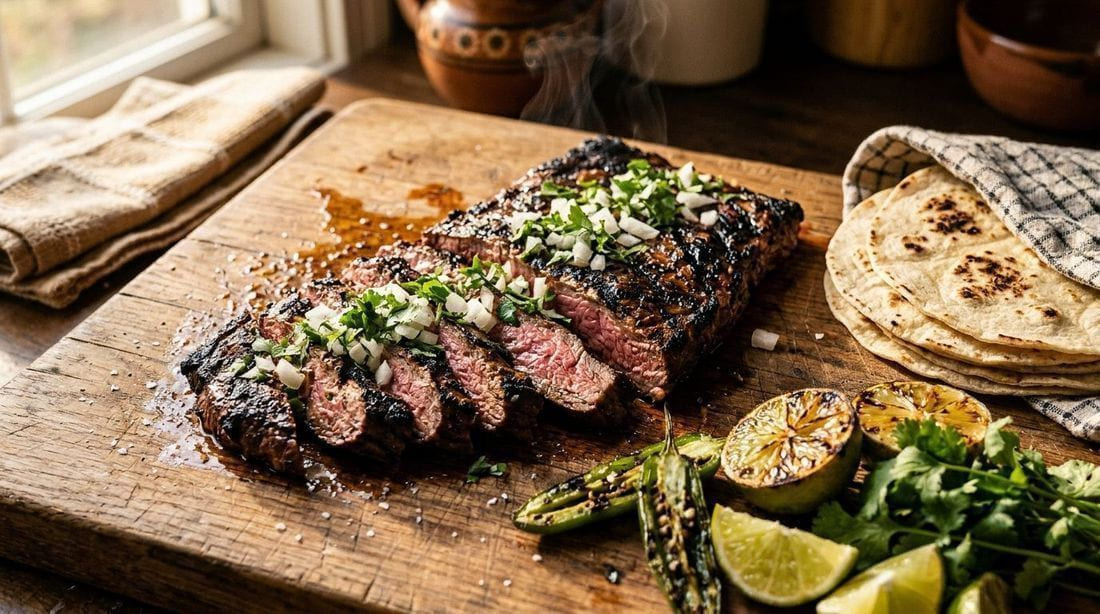
Slice and finish: slice the steak thin, against the grain — the fibers of skirt steak run long, so cut across them at a slight angle, 1/4-inch thick. Brush the slices with the boiled marinade glaze, season with a pinch of salt, and pile them onto a warm platter.
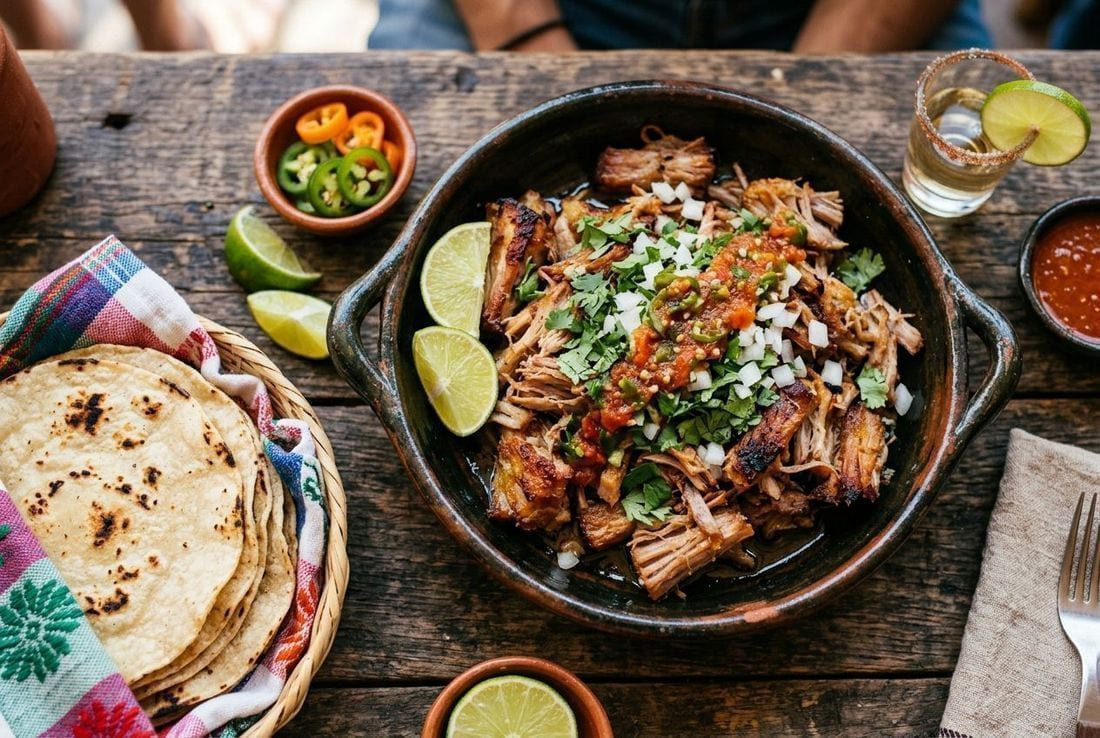
Serve: scatter the chopped onion and cilantro over the top, stack the warm tortillas alongside, and let everyone build their own tacos. Lime wedges at the table — the squeeze of lime at the end is what makes the whole plate sing.
What cut of beef is best for carne asada?
Skirt steak is the classic — it is thin, loose-grained, and marinated all the way to the middle in a few hours, and it slices into tender ribbons against the grain. Flap steak (bavette) is the honest substitute with a slightly deeper beef flavor. Flank steak works but is leaner and a little chewier, so slice it even thinner. Avoid eye of round or top round: they have almost no fat and no braise length to help them, and they end up dry no matter how long they marinate.
How long should carne asada marinate?
Two to four hours is the sweet spot. That is long enough for the citrus, garlic, and chiles to season the meat through, but not so long that the lime juice starts to break down the surface and turn it chalky or mealy. If you want to prep ahead for tomorrow, marinate for 2 hours, then pull the steak out of the liquid, pat it dry, and hold it in the fridge — the flavor will stay in the meat and the texture will stay right.
Can I make carne asada without a grill?
Yes — a screaming-hot cast-iron pan or a grill pan is the honest substitute. Heat the pan over high until it is lightly smoking, add the dried steaks, and sear 3–4 minutes per side without moving them. The flavor will be slightly less smoky than the grill, but the sear and the charred edges will be real. If you want more smoke, finish the seared slices with a 30-second pass over a gas burner or a pinch of smoked paprika in the glaze.
Can I make carne asada without soy sauce?
Yes — the soy sauce is the umami shortcut, not the recipe. The low-sodium route is to swap it for 1/4 cup beef stock plus 1/2 teaspoon of salt, or 1/4 cup of coconut aminos for a soy-free version. What you want is the salt and the savory depth; the citrus, garlic, cumin, and chiles are the identity, and they never change.
How do I store and reheat leftover carne asada?
Refrigerate the sliced steak in an airtight container for up to 3 days. The best way to reheat it is quick and hot: a dry skillet over medium-high for 1–2 minutes, or 30 seconds in a hot pan with a splash of the boiled marinade glaze. A microwave will make it tough — reheat low and slow if you must, and never past the point of steaming. Leftover carne asada over a warm tortilla the next day is a genuinely excellent lunch in its own right.
Why did my carne asada come out tough and chewy instead of tender?
Three usual suspects, in order: wrong cut, wrong slice, or skipped rest. Skirt steak is the classic — lean cuts like eye of round have no marbling and no grill length to help them. Slice thin, against the grain, at a slight angle: the fibers of skirt steak run long, and cutting across them is what makes each bite tender. And the 8–10 minute rest is non-negotiable — slicing early lets the juices run out onto the board instead of staying in the meat.
Why did my steak steam instead of sear on the grill?
A wet steak can never sear — the citrus marinade is water, and water on a hot grate becomes steam. Pull the steak out of the marinade 30–40 minutes before grilling (cold steak sears badly too), pat it completely dry with paper towels, and oil the grill — not the steak. If the grill is packed too tight, the temperature drops and you get the same steam problem: two or three pieces at a time on a hot zone is the rhythm.
Can I use the leftover marinade as a sauce?
Yes — but only after boiling it. The used marinade carried raw steak, so it must come to a rolling boil for 5 full minutes to make it safe, then reduce it to a thick, spoon-coating glaze. That glaze is the best finishing sauce on the plate: warm, citrus-garlic, and lacquered onto the sliced steak. Never brush it on raw or serve it unboiled — that is the one shortcut that can make people sick.