Ingredients
- 1 3/4 cups all-purpose flour, spooned and leveled
- 1 teaspoon baking soda
- 1/2 teaspoon baking powder
- 3/4 teaspoon fine sea salt
- 1 tablespoon ground cinnamon
- 1 1/2 teaspoons ground ginger
- 1/2 teaspoon freshly grated nutmeg
- 1/4 teaspoon ground cloves (or allspice)
- 1 1/2 cups pumpkin purée (one 15-oz can), NOT pumpkin pie filling
- 1 cup light brown sugar, packed
- 1/2 cup granulated sugar
- 3/4 cup neutral oil (such as canola or melted coconut oil)
- 2 large eggs, room temperature
- 1/4 cup milk or water
- 2 teaspoons vanilla extract
- 1 tablespoon turbinado (raw) sugar, for the crackled top (optional)
Instructions
Prep: preheat the oven to 350°F (175°C) with a rack in the lower third. Line a 9×5-inch loaf pan with parchment, leaving an overhang on the long sides as handles, and lightly grease the exposed ends.
Whisk the dry: in a large bowl, whisk the flour, baking soda, baking powder, salt, cinnamon, ginger, nutmeg, and cloves until evenly blended — no lumps of spice hiding anywhere. Blooming the spices dry like this spreads their flavor through every slice.
Whisk the wet: in a second bowl (or the same one, if you are committed to the one-bowl life), whisk the pumpkin purée, brown sugar, granulated sugar, oil, eggs, milk, and vanilla for about 1 minute, until the sugar mostly dissolves and the mixture looks glossy and uniform.
Combine gently: pour the wet mixture into the dry and fold with a spatula just until no dry streaks remain — 30 to 40 folds. The batter will be thick and spreadable. Overmixing is the one-way street to a tight, chewy crumb, so stop the moment the flour disappears.
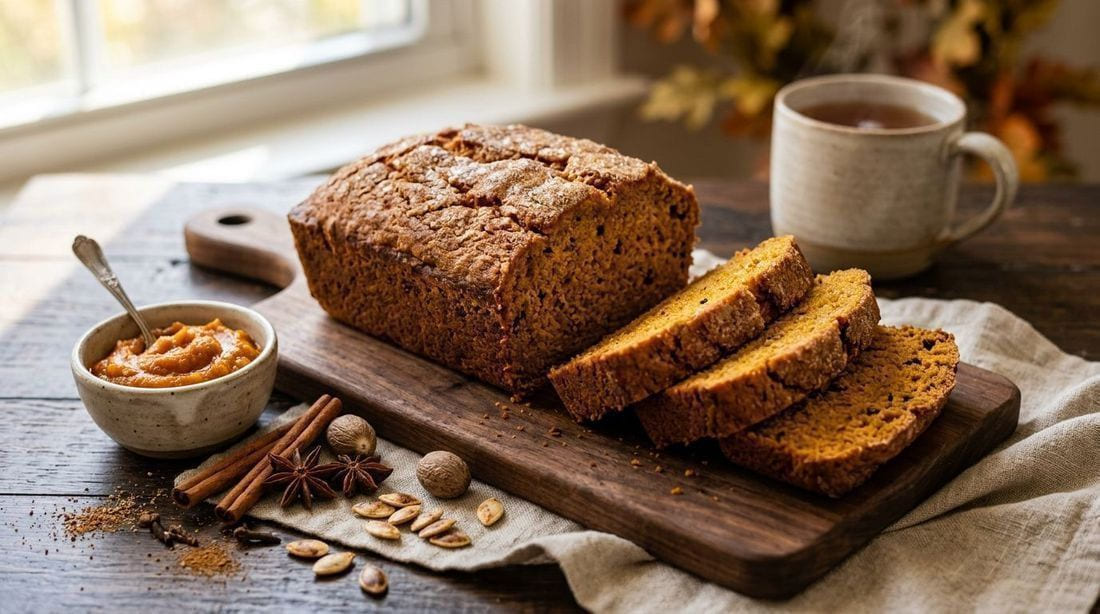
Fill and finish: scrape the batter into the lined pan and smooth the top. If using, sprinkle the turbinado sugar evenly over the surface — it melts into that bakery-style crackle as the loaf bakes.
Bake: bake 60–70 minutes, rotating the pan once at the 35-minute mark, until a skewer poked into the center comes out with a crumb or two attached but no wet batter. The top should be deeply crackled and a toothpick in the crown will come out clean. If the top is browning fast but the center is still wet at 55 minutes, tent loosely with foil for the final stretch.
Cool: cool the loaf in the pan for 15 minutes, then lift it out by the parchment and cool it fully on a wire rack — at least 1 hour before slicing. Warm pumpkin bread slices raggedly; fully cooled, the crumb sets and every slice comes out clean. It is even better the next day.
Tips for Success
- Pumpkin purée is the whole texture, so measure it honestly. Too little and the loaf is dry and bland; too much and the center stays raw-gummy while the edges dry out. One 15-oz can (1 1/2 cups) is exactly right. Never substitute pumpkin pie filling — it is pre-sweetened and spiced and will throw off everything. If your purée looks watery on top, stir it before measuring; do not drain it.
- Oil beats butter here, on purpose. Pumpkin bread is served at room temperature or from the fridge over days, and oil stays liquid where butter goes hard — that is why this loaf stays moist on day three while butter-based loaves turn dense. If you want butter flavor anyway, brown a couple of tablespoons and brush it over warm slices at serving.
- The crackled top wants heat and sugar: a properly preheated oven (give it 20 minutes past the preheat beep), a sprinkle of turbinado sugar, and no peeking for the first 35 minutes. Opening the oven early collapses the dome and settles the crackle. Under-mixing also matters — a slightly ragged surface bakes into more interesting crag than a smooth one.
- Spice from whole, fresh ground where it counts: nutmeg grated off the whole seed, cinnamon no older than a year, ginger fresh from a sealed jar. A tired pumpkin-pie blend (mostly cinnamon and dust) is why so many pumpkin breads taste flat. A tablespoon total sounds like a lot — that is the point; pumpkin is dense and mild and needs it.
Perfect pairings
Pumpkin bread owns October — pair it with the other anchors of the sweet quick-bread table.
Frequently Asked Questions
Can I use fresh pumpkin instead of canned purée?
Yes, but treat it differently. Roast a small sugar pumpkin (2–3 lbs) halved and cut-side down at 400°F for 35–45 minutes, then purée the flesh — and drain it well: fresh purée holds far more water than canned. Spread it in a fine sieve or a towel-lined bowl and let it drain 30–60 minutes (or press with paper towels) until it is about the thickness of canned purée — thick enough to mound on a spoon. Skipping the drain step is the classic reason a fresh-pumpkin loaf bakes up gummy in the middle. You need 1 1/2 cups, measured after draining.
Oil or butter for pumpkin bread?
Oil is the better structural choice and this recipe uses it deliberately: pumpkin bread is eaten over several days at room temperature, and oil keeps the crumb soft where butter hardens and turns it dense by day two. Butter is the flavor winner in something eaten warm from the oven, but pumpkin bread is a keeper loaf. The best of both worlds: use the oil base as written, and brush melted (or browned) butter over the warm slices right before serving.
Can I make my own pumpkin spice blend instead of buying it?
Absolutely — and this recipe already does it from scratch: cinnamon, ginger, nutmeg, and cloves in the ratios that favor cinnamon without drowning the other notes. A standard substitute for the tablespoon here is 2 teaspoons cinnamon + 1 teaspoon ginger + 1/2 teaspoon nutmeg + 1/4 teaspoon allspice or cloves. The key is freshness: ground spices fade noticeably after a year, and pumpkin purée is mild enough that stale spices read as nothing. Whole nutmeg grated fresh and recently opened cinnamon make more difference than any specific ratio.
Why is my pumpkin bread gummy or raw in the middle?
Almost always too much purée or too much moisture in the batter — pumpkin purée is not interchangeable by volume unless it is measured honestly, and fresh purée that was never drained carries double the water of canned. A second cause is oven temperature: if the oven runs cool or the pan is dark and small, the edges set while the center stays wet. Fix it forward: measure exactly 1 1/2 cups purée, bake in a standard 9×5 pan on the lower rack, and test with a skewer at 60 minutes — if it comes out wet, keep baking in 5-minute stretches, tenting with foil once the top is deeply browned. If the damage is done, slices from the center can be dried out in a 300°F oven for 10 minutes, but the real fix is the next loaf.
How should pumpkin bread be stored, and does it freeze well?
It keeps beautifully. Room temperature: wrap the fully cooled loaf tightly in plastic or foil (or slice-by-slice in an airtight container) for up to 4 days — the oil-based crumb actually improves overnight as the moisture evens out. Refrigeration is optional and extends life to a week, but the fridge stales bread faster than the counter does; toast cold slices briefly to revive them. Freezing: wrap the whole loaf or individual slices in plastic, then a freezer bag, for up to 3 months. Thaw slices at room temperature for 30 minutes or toast them from frozen — they come back nearly oven-fresh.
Can I turn this into muffins or mini loaves?
Yes — the batter is a quick-bread workhorse. For 12 standard muffins, line a tin, fill cups nearly full, and bake at the same 350°F for 22–26 minutes, checking with a skewer at 20. For three mini loaves, bake 40–48 minutes. Both need the same doneness test (crumb attached but no wet batter). Keep the turbinado top on muffins too — it crackles even better on a domed muffin. Do not overfill deeper pans or expect one big double batch to work in a single loaf: a double batch in one pan bakes gummy in the center before the crust ever sets; bake two pans side by side instead.
Affiliate disclosure: this page contains affiliate links. If you buy equipment through them, Cuisinety earns a small commission at no extra cost to you — it keeps the site free. Picks follow the same research-backed standards as our gear guides. Read ourfull affiliate disclosure.
Browse All Recipes →
Love this recipe? Pin it!
Save it to your Pinterest board so you can find it later.
Pin this Recipe