Ingredients
- 1 lb (450 g) ground pork (80/20 or 85/15)
- 2 cups garlic chives, finely chopped (about 1 bunch) — or regular chives with a few scallion greens in a pinch
- 2 scallions, white and light green parts, finely chopped
- 1-inch piece fresh ginger, grated
- 2 cloves garlic, minced
- 1 tablespoon soy sauce
- 1 tablespoon Shaoxing wine (or dry sherry)
- 1 teaspoon toasted sesame oil
- 1/2 teaspoon white pepper
- 1/2 teaspoon salt
- 1 packet round dumpling wrappers (about 40 wrappers, 1 lb / 450 g)
- 3 tablespoons neutral oil, for pan-frying
- 1/2 cup water, for steam-frying
- For the dipping sauce: 3 tablespoons soy sauce, 2 tablespoons Chinkiang black vinegar (or rice vinegar), 1 teaspoon chili oil, 1/2 teaspoon sugar, plus sliced scallions and grated ginger
Instructions
Make the filling: combine the pork, chives, scallions, ginger, garlic, soy sauce, Shaoxing wine, sesame oil, white pepper, and salt in a bowl. Stir firmly in one direction for 2–3 minutes until the mixture turns slightly sticky and pasty — that texture, not seasonings alone, is what makes juicy dumplings, because the proteins bind the juices in place.
Wrap the dumplings: keep the wrappers under a barely damp kitchen towel so they do not dry out. Lay one wrapper in your palm, drop a heaping teaspoon of filling (about 2 teaspoons) in the center, and moisten the edge with water using your finger. Fold into a half-moon and pleat one edge over the other, pressing firmly to seal — 12–16 pleats looks professional, but a well-pressed plain fold works just as well. Set each dumpling on a lightly floured tray, flat-side down, and cover with the towel. This takes most people 20–25 minutes for the full batch.
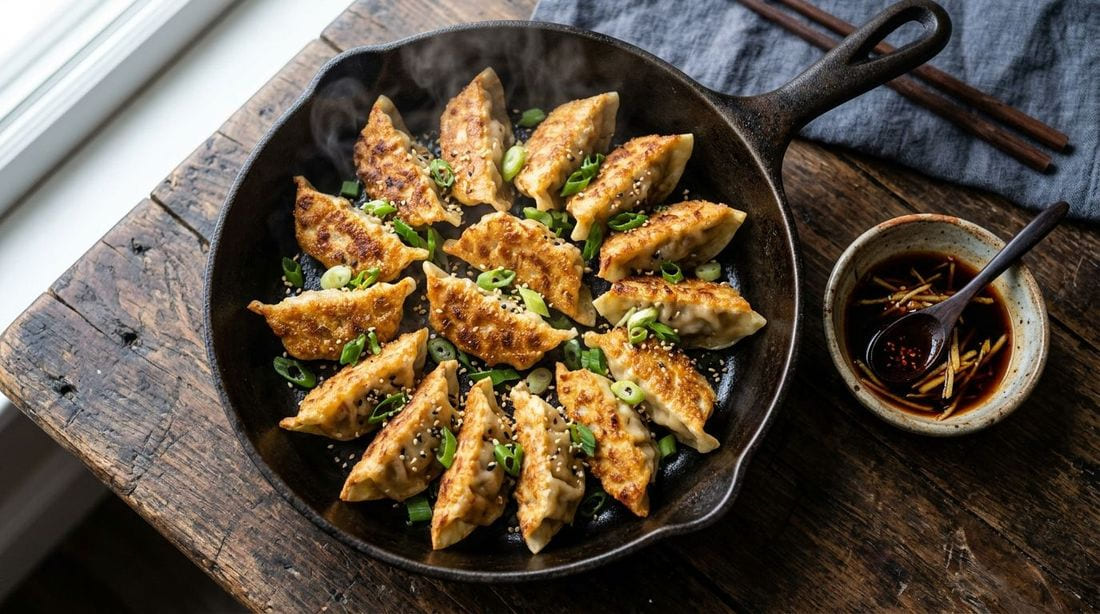
Pan-fry the first batch: heat 1 tablespoon of the oil in a large nonstick or well-seasoned skillet over medium-high heat. Arrange 12–14 dumplings flat-side down in a single layer, not touching, and fry undisturbed for 2–3 minutes until the bottoms are deep golden.
Steam: pour in 1/3 cup of the water and immediately cover with a tight lid. Reduce the heat to medium and steam 5–6 minutes, until the water has fully evaporated and the wrapper tops look translucent and slightly puffed.
Re-crisp: uncover, raise the heat to medium-high, and fry 1–2 minutes more until the bottoms turn dark golden and lacy. Slide them out onto a plate, golden side up. Repeat with the remaining oil and dumplings in two more batches — you can hold finished batches in a 200°F (95°C) oven, uncovered, while the rest cook.
Mix the dipping sauce: stir together the soy sauce, black vinegar, chili oil, sugar, and a spoonful each of scallions and grated ginger. Serve the dumplings immediately, hot, with the sauce on the side — the crisp bottoms soften within minutes, so eat them while they crackle.
Tips for Success
- Stir the filling in one direction until it turns sticky. This is the single most important step for juicy dumplings: the aggressive stirring unwinds and re-bonds the pork's proteins, which then trap the juices released during steaming. A loose, crumbly filling turns into dry, crumbly dumplings.
- Keep the wrappers under a damp towel, always. Store-bought wrappers dry out in minutes at the edges, and dry edges refuse to seal — the dumplings burst open in the pan and the juices escape into the oil. Recover the stack between every few dumplings, and press the seal twice if the edge feels dry.
- Do not crowd the pan and do not peek during the steam step. Dumplings need their oil bath and their steam bath without interruption; lifting the lid mid-steam drops the heat and the water stops evaporating on schedule. Twelve to fourteen per 12-inch skillet, three batches, and every one comes out with a lacquered bottom.
- Freeze the extras. Lay uncooked dumplings flat, not touching, on a floured tray and freeze solid, then transfer to a zip-top bag — they will keep for 3 months. Cook frozen dumplings straight from the freezer, adding 2 extra minutes to the steam step; no thawing.
Frequently Asked Questions
Can I use ground chicken or turkey instead of pork?
Yes, and it works well — just expect slightly less juicy dumplings. Pork's fat content is what keeps the filling moist, so with leaner meats add 1 tablespoon of vegetable oil (or a little extra sesame oil) to the filling and stir it in thoroughly with the rest. The wrappers and cooking method stay exactly the same.
I can't find garlic chives — what do I use instead?
Garlic chives (the flat, wide ones in the Chinese produce section) are traditional, but a 50/50 mix of regular chives and finely chopped scallion greens lands close enough that no one at the table will know. The flavor goal is sharp allium brightness against the rich pork — any combination of chives, scallions, and even a little chopped napa cabbage (salted, squeezed dry) delivers it.
Why do my dumplings stick to the pan and tear open?
Two usual suspects: not enough oil, and a weak seal. The oil layer is what lets the bottoms release and turn golden — if the pan looks dry, add a little more before the batch. And a dumpling that bursts is almost always a dumpling that was under-sealed: moisten the whole edge, press firmly, and double-check the two ends of the half-moon, which are the classic weak points. A nonstick skillet removes most of the frustration either way.
Can I boil or steam these instead of pan-frying?
Absolutely — this filling and wrapper work for every jiaozi cooking method. Boil like pasta: drop into boiling water, add a cup of cold water when they float, and fish them out when they float again after the second boil. Or steam in a bamboo or metal steamer for 10–12 minutes. Pan-fried gives you the crispy bottoms this recipe is named for, but the filling does not care how it gets cooked.
Affiliate disclosure: this page contains affiliate links. If you buy equipment through them, Cuisinety earns a small commission at no extra cost to you — it keeps the site free. Picks follow the same research-backed standards as our gear guides. Read ourfull affiliate disclosure.
Browse All Recipes →
Love this recipe? Pin it!
Save it to your Pinterest board so you can find it later.
Pin this Recipe