Journal · Trending · By Nadia
How to Read a Recipe Like a Pro and Avoid Kitchen Surprises
Spot hidden marinating times, softened-butter traps, and oven surprises before you cook — a 60-second checklist for reading any recipe like a pro.
 cuisinety
Journal · Trending · By Nadia
Spot hidden marinating times, softened-butter traps, and oven surprises before you cook — a 60-second checklist for reading any recipe like a pro.
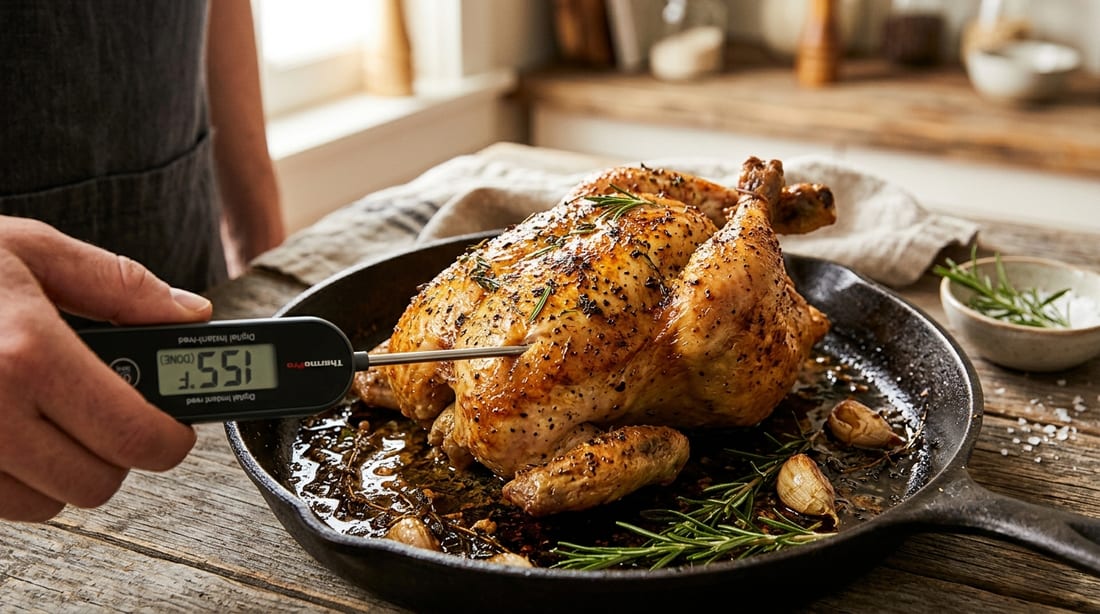
There is a difference between reading a recipe and scouting it, and most kitchen disappointments live in that gap. Reading tells you what to do. Scouting tells you what will go wrong if you start right now. Professional cooks run a fast second pass over any new recipe — not for inspiration, but to find the details that ambush home cooks an hour into the process.
Here is the uncomfortable truth: most surprises have nothing to do with cooking skill. Nobody fails at searing a chicken breast for lack of talent. They fail because they started at 6 p.m. for a 7 p.m. dinner, then hit the line that says marinate for at least 4 hours. Or because the butter that needed softening came straight from the fridge. These are logistics failures, and logistics failures are visible in advance — if you look for them.
The scouting pass takes two minutes and covers five checkpoints in a fixed order: hidden time commitments, ingredient states, oven and equipment, yield math, and substitutions. This guide walks through each, then compresses everything into a 60-second checklist.
Scan for trigger words: overnight, marinate, chill, refrigerate, rest, rise, proof, soak. Every hit is a time commitment that never appears in the stated cook time, which is why a recipe can say 30 minutes of active work and still require a 6-hour head start. Stated time and true elapsed time are two different numbers.
The fix is to work backward from your mealtime. A no-bake cheesecake is a 25-minute job on paper and a 7-hour job in reality, because it needs 6 hours in the fridge to set. Chicken tikka wants several hours in its yogurt marinade to taste right. Cinnamon roll dough needs a 1-to-2-hour rise before you even shape it. These are Tuesday plans you needed to make on Monday.
Not every bomb is equally dangerous. Marinating for flavor is negotiable — 30 minutes of a yogurt marinade still beats none. Chilling that sets structure is not — a warm cheesecake base will slide off the plate no matter how you plead. Dough rises sit in between: a warm spot can compress a 90-minute rise to an hour, but you cannot delete it. When a passive time is non-negotiable and does not fit your day, pick a different recipe rather than improvise and hope.
The second scan looks for state words attached to ingredients: room-temperature, softened, melted, thawed, drained, patted dry. These words are instructions disguised as adjectives, and they routinely take longer than any cooking step. Room-temperature butter is not cold butter left out for five minutes — it is butter at around 65 to 68 F that yields to gentle thumb pressure. From the fridge, that takes 30 to 60 minutes.
It matters because cold butter will not cream with sugar, and the air pockets created during creaming are the structure of a good chocolate chip cookie. Melted butter instead of softened spreads the dough into thin, flat coins. Cream cheese fails worse: cold cream cheese never fully smooths out, and no-bake cheesecake made with it stays lumpy forever — there is no heat to fix it later.
Thawed versus frozen bites hardest in savory cooking. Frozen spinach straight into a dish releases a cup of water you did not plan for, thinning sauces and steaming everything around it. Frozen meat hits the searing-pan trap: the surface steams instead of browning, and you get grey protein and a watery pan. For every main ingredient, ask what state it needs to be in, and check your fridge against that list.
An oven takes 15 to 25 minutes to genuinely preheat, longer with a baking stone. Preheating is the first thing to start, not something you remember after the batter is mixed. The deeper trap is accuracy: most home ovens run 15 to 25 degrees off their dial, and a ten-dollar oven thermometer tells you which way yours drifts. A recipe asking for 400 F behaves very differently in an oven that actually delivers 375.
Then scan the equipment list, which is usually implied rather than written. Does the recipe need a Dutch oven, a 9 by 13 baking dish, a blender, an instant-read thermometer? Discovering at step 4 that you need a thermometer you do not own is the classic mid-recipe surprise. For every piece of hardware the recipe touches, ask: do I have it?
Two quieter traps: rack position matters more than most people think — the default is the middle rack, and moving a bake to the bottom rack changes how the bottom browns. Pan material changes results too: dark metal bakes faster, glass takes longer but holds heat, and a deep casserole dish substituted for a sheet pan traps steam and kills browning. If the recipe specifies a pan, there is usually a reason.
The phrase serves 4 is the least reliable number in any recipe, because there is no legal definition of a serving. Read the yield as a total quantity instead: how many cups, how many actual pieces? A stew labeled serves 6 might make three honest adult portions or eight modest ones, and only the ingredient list tells you which. Thirty seconds of arithmetic prevents both the too-little-food and mystery-leftovers surprises.
Scaling is where yield traps sharpen. Halving a recipe that uses 3 eggs does not divide cleanly, and cooking forgives a rounded half-egg more than baking does. In baking, do not halve at all the first time you make something: leavening, pan geometry, and bake time interact, and a half batch in the wrong pan can overbake at the edges while the center stays wet.
That flips the usual thinking. A braise built for 6 takes the same 3 hours as a braise built for 2 — the oven does not care how much meat is in the pot. When passive time is long and yield is generous, making the full amount and freezing half is almost always the better deal. Freezer-friendly breakfast burritos exist for exactly this reason: one cooking session, many mornings solved.
Recipes run on unstated defaults, and scouting surfaces them. Salt in American recipe development means kosher salt — and Diamond Crystal and Morton have very different crystal sizes, so a tablespoon of one is roughly double the other. Butter usually means unsalted. Flour means all-purpose, spooned and leveled, not scooped. Yogurt means full-fat plain, not the watery kind or the thick Greek kind. None of this gets printed; it just gets assumed.
Some substitutions are safe because they only change flavor: swap the herbs, trade lemon for lime. The risky ones change chemistry or moisture. Baking soda and baking powder are not interchangeable at a 1-to-1 ratio — they work by different mechanisms. Cornstarch in a stir-fry sauce is doing a thickening job you cannot skip. Pre-shredded cheese carries anti-caking starch that makes sauces grainy instead of glossy. Greek yogurt in a hot sauce can split where regular yogurt will not.
The question that keeps substitutions safe is the one pros ask: what job is this ingredient doing? If the answer is flavor, substitute freely and taste as you go. If the answer is structure, moisture, or chemistry — eggs, flour, leavening, the acid that tenderizes meat — pause and check before you swap. Thirty seconds of research beats a ruined dinner.
The whole pass, compressed to about a minute. One: scan for passive-time words — overnight, marinate, chill, rest, rise, soak — and confirm the timeline fits your day. Two: check ingredient states — butter, cream cheese, eggs, anything frozen — and pull what needs warming to the counter now. Three: confirm the oven can preheat and the pans and tools the recipe assumes all exist. Four: read the yield as a quantity and decide if it feeds your table. Five: flag every planned substitution and ask what job each swapped ingredient does.
Run the checklist before you commit to the recipe, not after. If it fails — the dough needs 2 hours you do not have, the cream cheese is still cold — you have lost nothing but a minute. You pick a different recipe and move on. That is the value of scouting: it converts potential failed dinners into free decisions.
Sixty seconds of checking buys a whole evening of calm cooking. The recipes that surprise you are rarely badly written; they are recipes you met casually instead of properly. Meet every new recipe with this pass, and kitchen surprise starts meaning an unexpected compliment instead of a salvage operation.
Every recipe on Cuisinety is cooked before it is published, and one thing testing exists to catch is exactly this list: the passive times, the ingredient-state demands, the pan assumptions that trip people up. Where a recipe carries a trap, it gets flagged up front in the Cook's notes — not buried in step 7 where you would meet it with a hot pan already on the stove.
The pattern runs across the site. The chicken tikka notes spell out the minimum marinating time that makes the yogurt marinade worth doing. The no-bake cheesecake leads with its chilling requirement so nobody plans it for a same-day dinner party. The cinnamon rolls lay out the full rise-and-shape timeline before you touch flour. Those notes are the scouting pass, done for you by someone who already hit the ambushes.
For recipes from anywhere else, the 60-second checklist is your backup — different authors bury their traps in different places. Combine the two and you get the practical version of cooking like a pro: tested recipes that flag their own pitfalls, plus a habit that catches the rest. Fewer surprises, better dinners, and a lot less wasted butter.
These recipes pair with this article — make them tonight:
Advertisement