Ingredients
- 2 cups all-purpose flour, plus more for dusting
- 1 cup fine semolina
- 1 teaspoon salt
- 1/2 teaspoon sugar
- 1/2 teaspoon active dry yeast (optional, for softer msemen)
- 3/4 cup warm water, plus more as needed
- 1/4 cup vegetable oil (in the dough)
- 1/2 cup vegetable oil, for dipping and folding
- Fine semolina or flour, for dusting
- Honey or melted butter, for serving
- Amlou or jam, for serving (optional)
Instructions
Mix the flour, semolina, salt, and sugar in a large bowl. If using yeast, dissolve it in the warm water and let it sit 5 minutes until frothy. Add the water and 1/4 cup oil to the dry ingredients and mix into a soft, slightly sticky dough.
Knead for 8–10 minutes until smooth and elastic — the dough should be soft and supple, not stiff. If it feels dry, add water a teaspoon at a time. Cover and rest for 15 minutes.
Divide the dough into 8 equal balls. Pour the 1/2 cup oil into a shallow bowl. Dip each ball in the oil, then rest them all, covered, for 15–20 minutes — this relaxes the gluten so the dough stretches without tearing.
Take one ball and press it flat on an oiled surface. Using oiled hands, stretch and pat it outward into a very thin, almost transparent rectangle — think crepe-thin, about 12 inches across. Do not worry about perfect edges.
Fold it like an envelope: bring the left and right edges to the center, then fold the top and bottom edges in to overlap. You now have a layered square. Gently press it to a uniform thickness. Repeat with the remaining balls, resting each folded square under a towel.
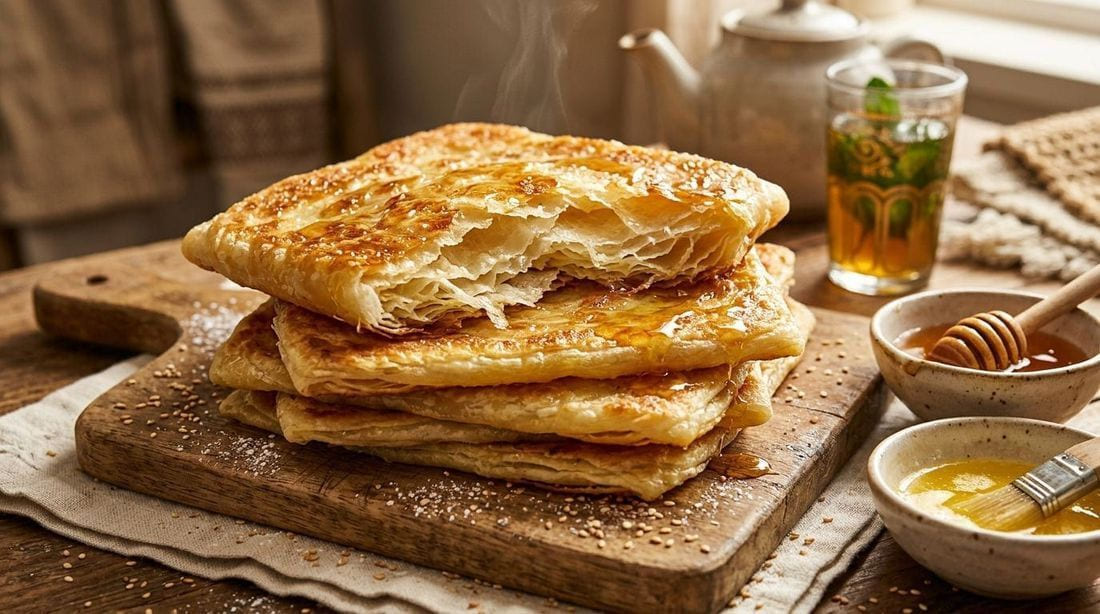
Heat a cast-iron or nonstick skillet over medium heat with a thin slick of oil. Cook each square 2–3 minutes per side, pressing gently with a spatula, until deeply golden and crisp on both sides.
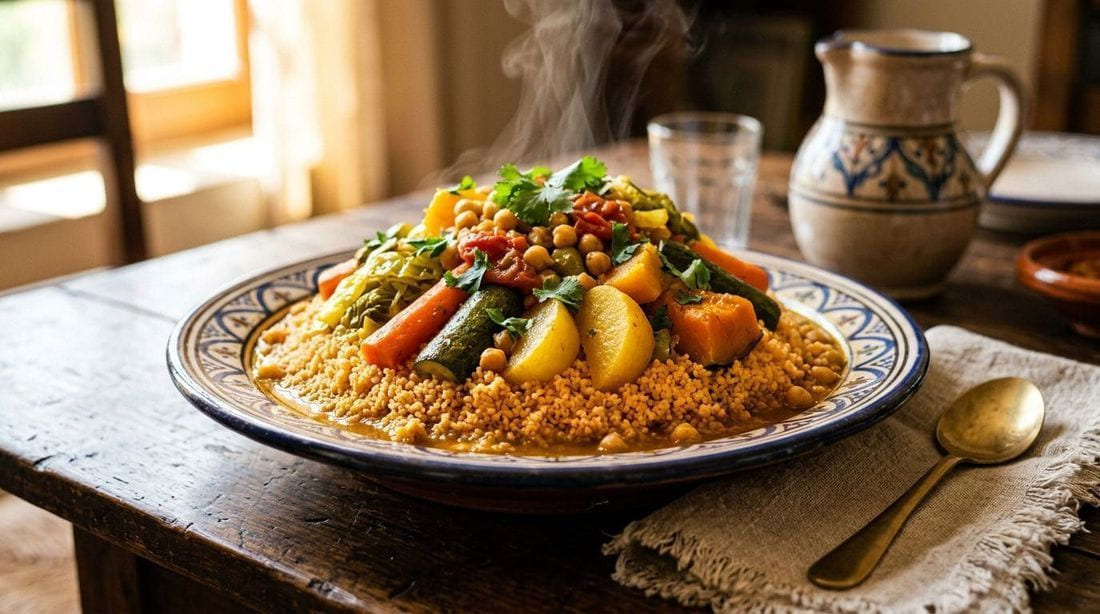
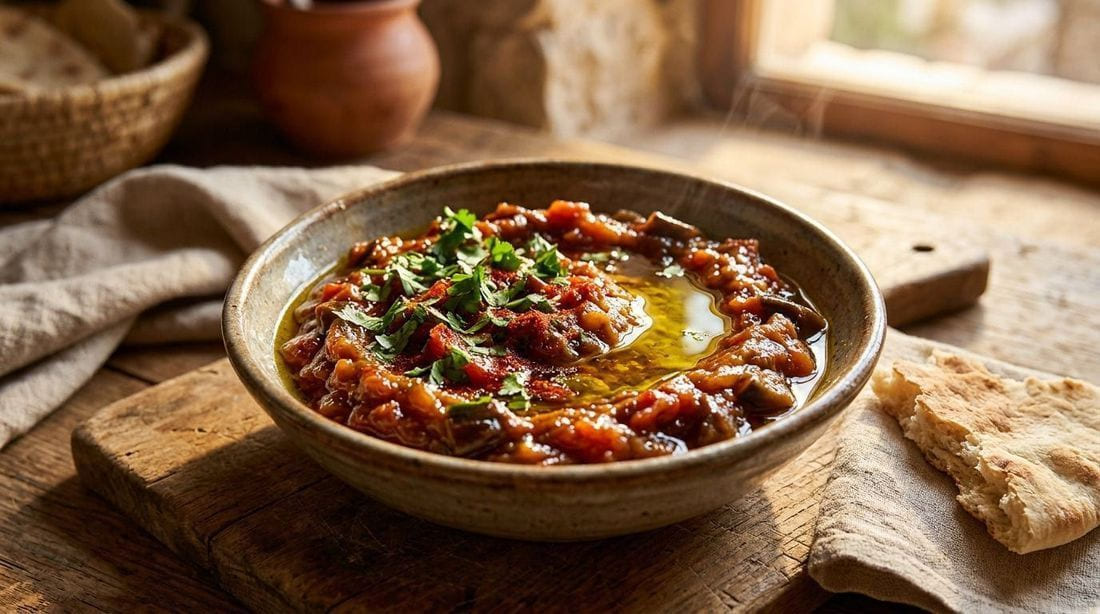
Stack the cooked msemen under a clean kitchen towel to keep them soft and warm. Serve immediately with honey, melted butter, or amlou — or alongside tagines, Harira, and Zaalouk.
Tips for Success
- Oil is not the enemy here — it is the ingredient. An oiled surface and oiled hands are what let you stretch the dough paper-thin without tearing, and the oil between the folds is what creates the layers.
- Respect the rests. If the dough fights back when you stretch it, it needs more resting time, not more muscle. When in doubt, rest it 10 more minutes under the bowl.
- Keep cooked msemen stacked under a towel. The steam between the layers keeps them tender; left naked on a plate, they go brittle fast.
Perfect pairings
These recipes belong on the same table — cook them together for a full spread, or swap in a variation next time.
Frequently Asked Questions
What do I serve with msemen?
For breakfast, the classic is honey, melted butter, or amlou (almond-arban-honey spread) folded inside while still warm. Savory side: serve alongside tagines, Harira soup, or Zaalouk instead of bread — it is the perfect scooping vehicle.
Can I make msemen ahead or freeze them?
Yes, two ways. Cooked msemen freeze beautifully for up to 3 months — reheat in a dry skillet for a minute per side. Or freeze the raw folded squares between sheets of parchment and fry them straight from frozen, adding a minute per side.
Do I need semolina?
No — all-purpose flour alone works fine and gives a softer, more bread-like msemen. Semolina adds the characteristic golden color and slightly gritty, crisp texture that makes msemen taste like the ones in Morocco. For the real deal, use both.
Why so many rests and folds?
Every fold creates a layer, and every rest relaxes the gluten so the next stretch goes thinner. Skip the rests and you get tough, thick bread; respect them and you get the flaky, tear-apart layers msemen is famous for.
Why are my msemen not flaky?
Flakiness comes from thin, well-oiled layers — if the dough springs back when you stretch it, the gluten has not relaxed. Rest the dough for 10 extra minutes between folds, stretch it paper-thin (it should be translucent), and brush each layer generously with oil before folding. Frying on medium heat, not high, gives the layers time to separate and crisp.
Why did my msemen come out hard or tough?
Usually the dough dried out or the pan was too hot. Keep the dough covered with a damp towel while working, use oil instead of extra flour on the surface (flour makes them dense), and cook on medium heat, flipping often — a raging-hot pan browns the outside before the inside cooks through. Soft, slightly sticky dough is correct for msemen.
Why do my msemen stay doughy in the middle?
That is a sign the layers were too thick or the heat too high. Roll and stretch each portion until very thin before folding, and press gently with a spatula while frying so the layers cook evenly and puff in thin sheets. Give each side enough time over medium heat to develop golden spots — pale patches mean uncooked dough in the center.
Affiliate disclosure: this page contains affiliate links. If you buy equipment through them, Cuisinety earns a small commission at no extra cost to you — it keeps the site free, and we only recommend gear we actually use. Read ourfull affiliate disclosure.
Browse all 17 moroccan recipes →
Love this recipe? Pin it!
Save it to your Pinterest board so you can find it later.
Pin this Recipe