Ingredients
- 2 large yellow onions, thinly sliced
- 4 cloves garlic, minced
- 1 tablespoon fresh ginger, grated
- 1/4 teaspoon saffron threads, crumbled and soaked in 3 tbsp hot water
- 1 teaspoon ground turmeric
- 1 teaspoon ground cumin
- 1/2 teaspoon smoked paprika
- 1/4 teaspoon ground cinnamon
- 4 bone-in, skin-on chicken thighs (about 1 3/4 lb)
- 2 tablespoons olive oil, plus more for drizzling
- 1 cup pitted or cracked green olives, rinsed
- 1 whole preserved lemon, quartered (rind only, flesh removed)
- 1/2 cup water or low-sodium chicken broth
- 1/2 teaspoon salt, plus more to taste
- 1/4 teaspoon black pepper
- Fresh cilantro leaves, for serving
- Crusty bread or couscous, for serving
Instructions
Soak the saffron threads in 3 tablespoons of hot water and let them steep while you prep. Thinly slice the onions and mince the garlic; grate the ginger.
In a wide Dutch oven or heavy pot, heat the olive oil over medium heat. Add the onions and cook, stirring occasionally, for 10–12 minutes until soft and golden — you want them to sweeten, not brown crisply. Add the garlic, ginger, and all the spices (turmeric, cumin, smoked paprika, cinnamon) and the saffron water, and cook for 1 minute until fragrant.
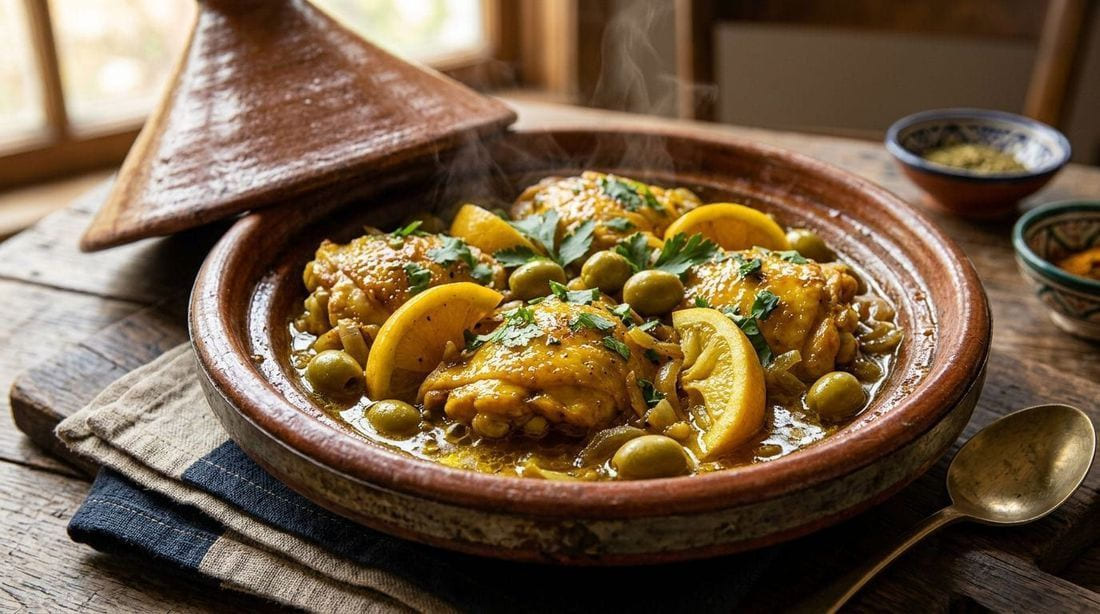
Season the chicken thighs with salt and pepper. Nestle them skin-side up into the onion bed, pushing them down so the onions come up around them. Tuck the quartered preserved lemon and rinsed olives in and around the chicken.
Pour the water or broth around the edges, not over the chicken, to keep the skin intact. Cover the pot tightly with the lid.
Simmer over the lowest possible heat for 60–75 minutes. Do not lift the lid for the first 45 minutes — the trapped steam does the braising. The chicken is done when it is fall-apart tender and the sauce is thick and silky.
If the sauce looks thin at the end, uncover and simmer for 5–10 minutes to reduce. Taste and add salt if needed (the olives and lemon are salty, so go easy).
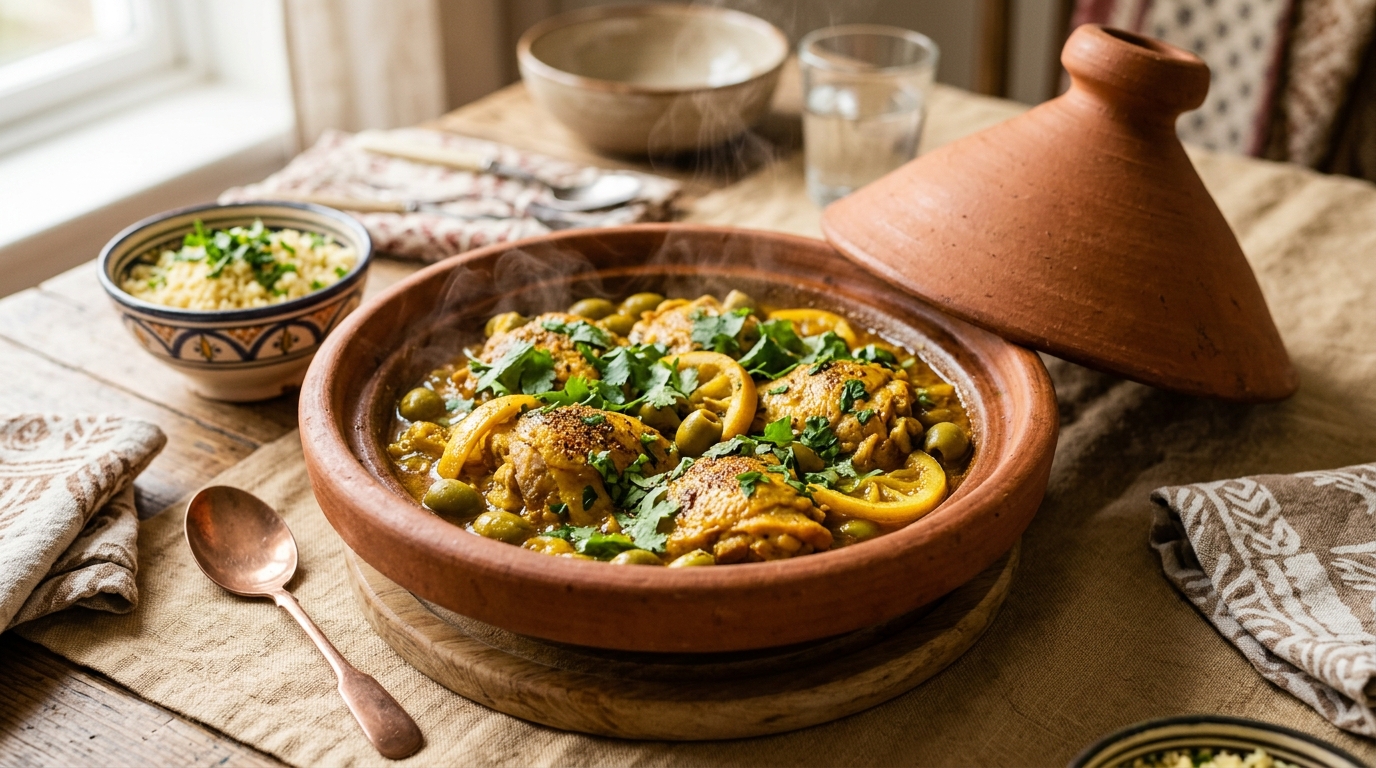
Scatter with fresh cilantro and a final drizzle of olive oil. Serve directly from the pot with crusty bread or fluffy couscous for soaking up the sauce.
Tips for Success
- The onion bed is everything. Sliced thin and cooked low and slow, the onions melt into a jammy, saffron-golden sauce that is the soul of this dish. Do not rush this step.
- Preserved lemon is what makes it Moroccan. Use only the rind (the flesh is intensely salty and the pith bitter). Find them at Middle Eastern grocers or online; if you must substitute, use 2 teaspoons of grated lemon zest plus a pinch of salt — milder, but still bright.
- Keep the heat low and the lid on. This is a braise, not a boil. The lowest flame and a sealed pot give you silky, juicy chicken every time.
Perfect pairings
These recipes belong on the same table — cook them together for a full spread, or swap in a variation next time.
Gear we used for this recipe
Read our hands-on review before you buy:
Frequently Asked Questions
What do I serve with chicken tagine?
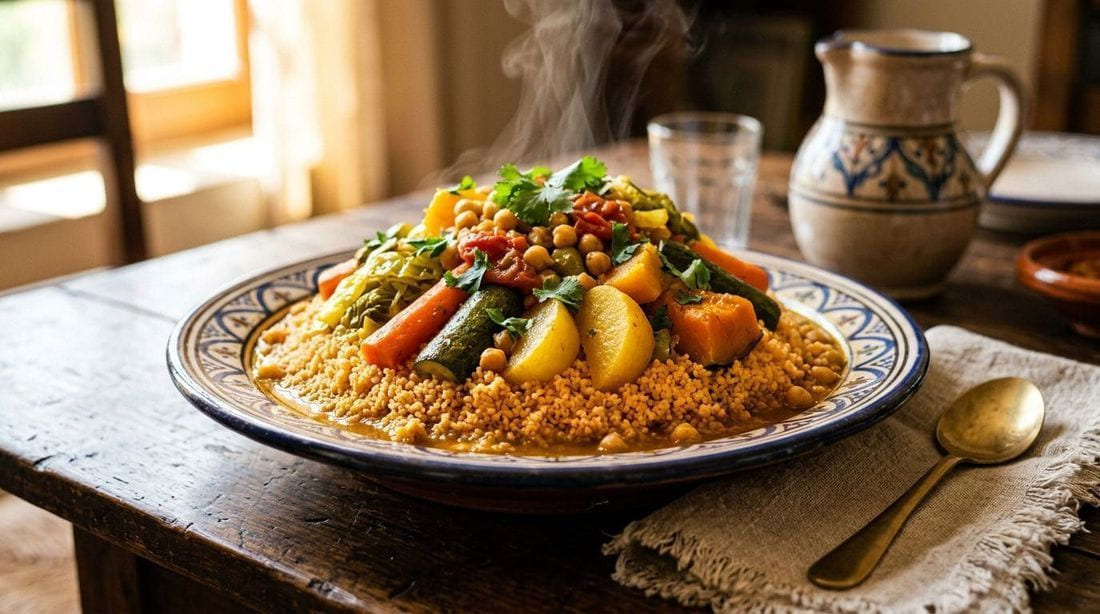
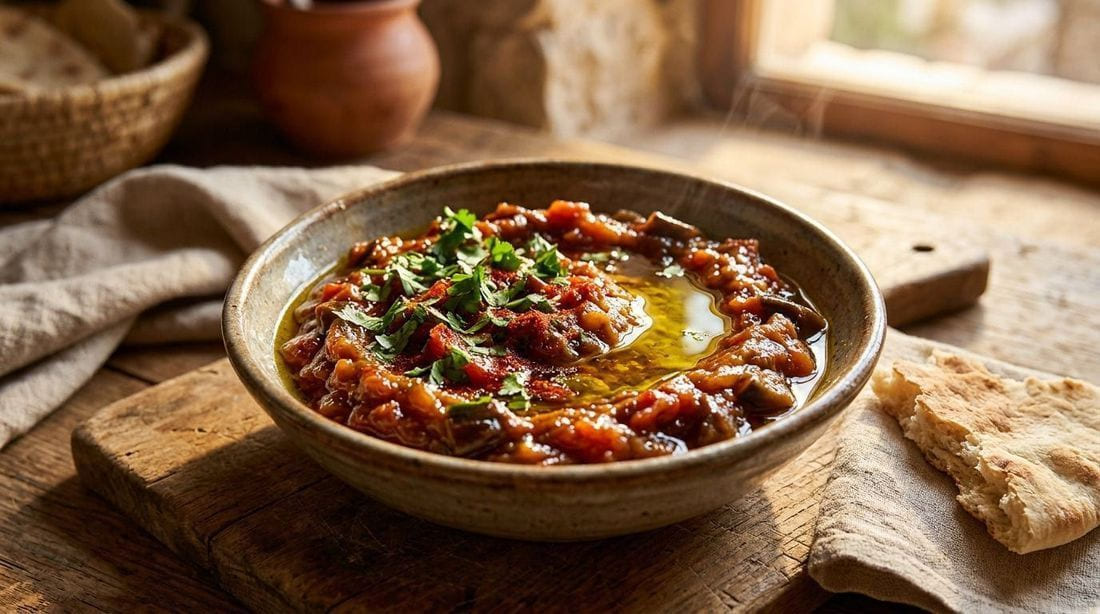
Fluffy couscous is the classic pairing — it soaks up the saffron sauce beautifully. Warm crusty bread for mopping the plate, or our flaky Msemen, are also wonderful. Pair it with Zaalouk as a side for a full Moroccan spread.
Can I make this ahead of time?
Yes, and it is even better the next day. Cool it completely, refrigerate in an airtight container for up to 3 days, and reheat gently on the stove. The flavors deepen overnight.
How is this different from the 5-Ingredient Tagine?
This is the full, traditional version with caramelized onions, ginger, saffron, and a layered spice blend — deeper and richer. The 5-Ingredient Tagine is a stripped-down shortcut using just chicken, onions, olives, preserved lemon, and water. Both are delicious; this one is the showstopper.
Can I freeze chicken tagine?
Yes, up to 3 months. Cool completely, freeze in an airtight container, and thaw overnight in the fridge. Reheat gently and finish with fresh cilantro and a squeeze of lemon to brighten it back up.
Why did my chicken tagine turn out dry?
Almost always heat that is too high or a lid that did not seal. This is a braise: keep the flame on the lowest setting, keep the lid tightly closed for the first 45 minutes, and do not skip the onion bed — it releases the liquid that keeps the chicken moist. Bone-in thighs stay juicier than boneless.
My tagine came out too salty. How do I fix it?
Olives and preserved lemon are naturally salty, so rinse the olives first and use only the rind of the preserved lemon (discarding the intensely salty flesh). If it is already salty, simmer a peeled raw potato in the sauce for 15 minutes and remove it before serving — it absorbs excess salt.
Can I use boneless chicken instead of bone-in thighs?
Yes, but reduce the cooking time to 40–50 minutes and check the chicken at 40. Boneless cooks faster and dries out more easily, so pull it a little early and let it rest in the hot sauce for 10 minutes.
Affiliate disclosure: this page contains affiliate links. If you buy equipment through them, Cuisinety earns a small commission at no extra cost to you — it keeps the site free, and we only recommend gear we actually use. Read ourfull affiliate disclosure.
Browse all 17 moroccan recipes →
Love this recipe? Pin it!
Save it to your Pinterest board so you can find it later.
Pin this Recipe