Bread is the real side dish
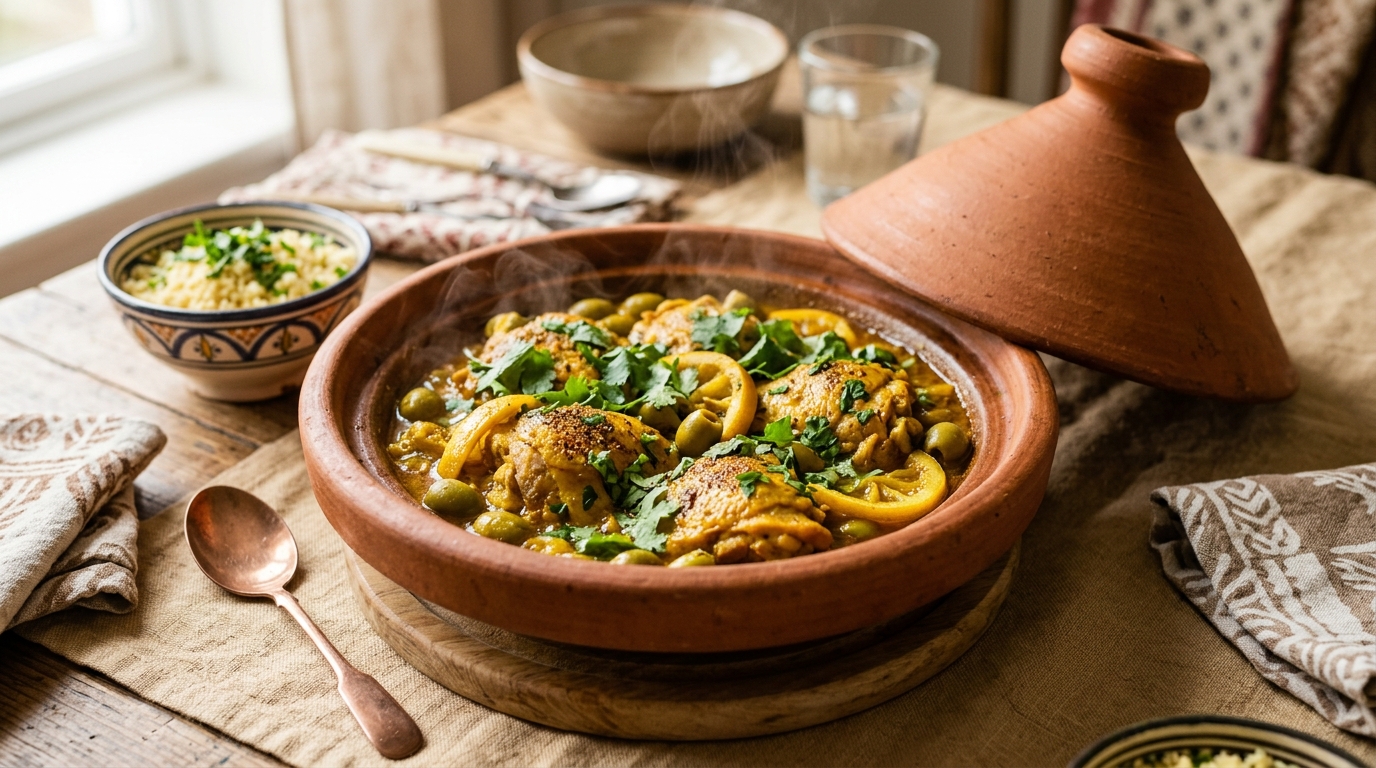
In Morocco, the tagine is not served over rice or on a plate with a knife and fork — it is served in the pot, with bread for scooping. The mopping bread matters as much as the stew. Flaky Moroccan msemen, pan-fried and golden, is the premium choice: its layers soak up sauce without turning to mush. A good crusty loaf does the same job in a pinch.
Tear the bread, scoop the sauce, and let the tagine do the talking. If you have never eaten a tagine this way, you are about to understand why the pot has a pointy lid and the table has no forks.
Couscous, salads, and a spoon of harissa
Couscous is the other great sidekick. A steamed, buttered bowl of it — or the full Seven-Vegetable Couscous (Couscous Royale if you want the meat) — turns a tagine into a feast that feeds a crowd. On the lighter side, cold salads cut through the richness: zaalouk, the smoky eggplant and tomato salad, is the classic companion and doubles as a dip for the bread.
And never underestimate a small bowl of harissa on the table. Not stirred in — offered. A little spoon of heat changes the meal the same way salt does: it wakes everything up.
Drinks and dessert to close the meal
The tagine meal ends the Moroccan way: with mint tea, poured from a height. If you are building the full table, start with harira soup, move to the tagine with bread and salads, and finish with mint tea and something sweet — chebakia, sellou, or sfenj.
It sounds like a lot, but it is the same rhythm as any good dinner party: one slow centerpiece, things to scoop and dip, and a sweet note at the end. The tagine is the main event; everything else is there to make sure nobody leaves hungry.