The iftar rhythm
The Moroccan iftar has a rhythm that has not changed in generations. The fast breaks with dates and milk, then comes the soup — harira, the tomato, lentil, and chickpea soup that is practically Ramadan in a bowl. It is heavy enough to settle a long day and light enough to leave room for the meal to follow.
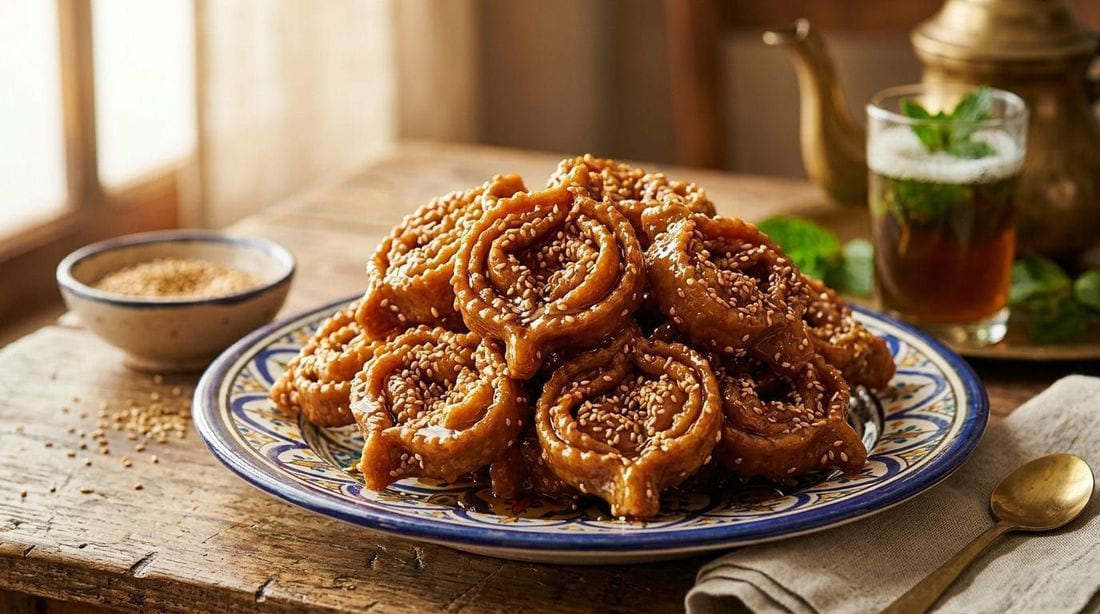
After the main course — often a tagine or couscous — the table turns sweet. Chebakia, the honey-glazed flower cookies, sit next to sellou, the no-bake sesame and almond balls, and everything is washed down with mint tea poured from a height. It is a table built to feed a family at sunset, every sunset, for a month.
The make-ahead strategy
The secret to a calm Ramadan table is that almost everything is made ahead. Harira freezes like a champion for up to three months — make a double batch in advance. Sellou keeps for weeks at room temperature, which is why it is the classic gift-and-graze sweet of the month. Chebakia is best fried the day you serve them, but the dough rolls out and shapes ahead of time, waiting in the fridge.
Only the mint tea is truly last-minute, and that is the point: the pour from a height is the ceremony, and it only takes five minutes. A little planning, and the daily iftar becomes a gathering instead of a scramble.
Build your own Ramadan table
Start with our harira soup recipe, then add the sweets: chebakia for the classic flower cookies, sellou for the no-bake option that keeps all month, and the mint tea recipe for the pour that ends every meal. Each one is method-reviewed by the Cuisinety editors and scaled for a real family table.
Whether you fast or not, the Ramadan table is a masterclass in feeding people well: one warm soup, one generous main, and sweets that were ready before anyone was hungry. That is a tradition worth borrowing.