Journal · Trending · By Yasmine
Exploring Global Flavors at Home with Simple Ingredient Swaps
Harissa, gochujang, miso, za'atar: how one or two pantry ingredients transport an ordinary dish, plus simple swaps when the store fails you.
 cuisinety
Journal · Trending · By Yasmine
Harissa, gochujang, miso, za'atar: how one or two pantry ingredients transport an ordinary dish, plus simple swaps when the store fails you.
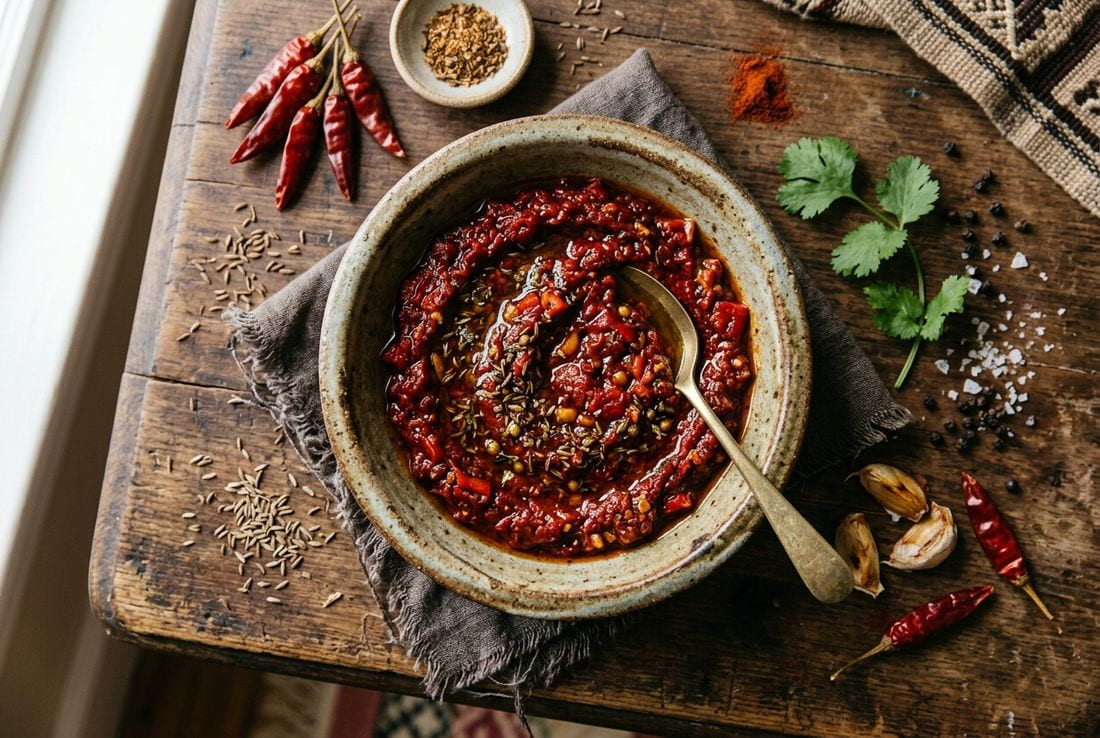
You do not need to master a cuisine to cook it. You need one or two of its key ingredients on your shelf. This is the pantry-bridge idea: certain ingredients carry enough of a cuisine's flavor signature that everything else can come from your ordinary weeknight pantry — onions, garlic, canned tomatoes, rice, chicken, eggs. Harissa makes a pot of simmered tomatoes speak Moroccan; gochujang in a honey glaze speaks Korean.
The reason this works is concentration. Bridge ingredients are compressed combinations: harissa is chiles, garlic, cumin, coriander, and olive oil in one spoonful, while gochujang packs chile, rice, and fermented soybean — heat, sweetness, and savory depth at once. A spoonful of any of these does work that would otherwise take six steps and twenty minutes.
This article covers eight bridge ingredients: what each one does in a dish, a workable substitute for when your store fails you, and one concrete use you can cook this week. Every dish named comes from the tested Cuisinety collection, and most live in our Moroccan, Middle Eastern, Asian, Indian, or Pakistani cuisine hubs — so once an ingredient hooks you, a whole shelf of recipes waits behind it.
Harissa is the North African chili paste that tastes like heat with manners: chiles bring fire, garlic, cumin, and coriander bring perfume, and olive oil rounds it into something you can stir into anything. Its superpower is compatibility with long-cooked things — stews, braises, roasted vegetables — where fresh chilies would stay harsh but harissa melts into the sauce.
Can you substitute it? In a pinch, mix two parts tomato paste with one part cayenne or crushed red pepper, a pinch of cumin, a grated garlic clove, and a slick of olive oil. You lose the rose and caraway notes some versions carry, but you keep the essential move: chili flavor that has already been cooked and blended, so it integrates instead of sitting on top.
Concrete use this week: stir a tablespoon of harissa into our Moroccan Harira Soup just after the tomatoes go in, or whisk it into the olive oil before roasting eggplant for Zaalouk. For fish, Chermoula Sardines show the same logic with fresh herbs instead of paste.
Preserved lemon is harissa's quiet partner: lemon peel that has mellowed — floral, salty, almost savory, with none of the sharp acidity of fresh juice. The swap: finely grate the zest of a fresh lemon, mix with a pinch of salt, and add it off the heat. Where it earns its shelf space: Chicken Tagine with Preserved Lemon and Olives, where the lemon dissolves into the sauce, and Moroccan Fish Tagine with Chermoula.
Gochujang, a thick Korean paste of chile, glutinous rice, and fermented soybean, is sweet-hot and savory at once — which is why it sticks to things so well. It behaves like a sauce that is already finished: thinned with vinegar it is a marinade, mixed with honey it is a glaze, stirred into mayo it is a condiment worth putting on everything for a week.
The substitute that actually works: mix equal parts miso and honey, then add crushed red pepper until it registers as pleasantly hot. You lose some fermented funk, but the sweet-savory-hot balance survives. The concrete use is our Bibimbap, where gochujang ties rice, vegetables, and a fried egg into one bowl — and it is the fastest upgrade for a plain honey-garlic glaze on wings.
Fish sauce is the least glamorous and most useful bottle in Asian cooking. In a dressing or stir-fry sauce, it delivers salt with a savory roundness table salt cannot reach — the reason a handful of ingredients can taste like takeout. The swap: light soy sauce plus a squeeze of lime, plus half a teaspoon of anchovy paste if you have it. Concrete uses fill our Asian hub: the sauce for Beef and Broccoli, the finishing splash in Chicken Fried Rice, and the non-negotiable base of Pad Thai.
Miso, fermented soybean paste, is umami in paste form — salty, nutty, slightly sweet, with a depth that reads as meaty even in vegetarian dishes. Its bridge quality is that a small amount makes anything taste like it cooked longer than it did.
The swap: for one tablespoon of miso, use one teaspoon of soy sauce plus half a teaspoon of tahini; the tahini supplies the paste-like body soy lacks. Concrete use: mash a tablespoon of white miso into softened butter and spread it under the skin before our Lemon Herb Roast Chicken, or whisk a teaspoon into vegetable soup at the end — it behaves like a stock that took six hours.
Coconut milk is the opposite kind of bridge: not savory depth but instant body and sweetness. It turns a spiced tomato base into a curry with real richness, no dairy and no roux required. The swap depends on the job: heavy cream works for richness but loses the coconut aroma; blended soaked cashews carry the body better in dairy-free versions. Never substitute the thin beverage-style coconut drink — it will split the sauce. The concrete use is our Creamy Coconut Chickpea Curry, where full-fat coconut milk and bloomed spices turn pantry staples into dinner in about half an hour.
Za'atar is the Middle Eastern blend of dried thyme, sesame seeds, and sumac — herbaceous, nutty, and tangy at once. Unlike the pastes above, it is not a base; it is a finish, which makes it the easiest bridge ingredient of the eight. Sprinkle it on anything fatty or creamy and the dish wakes up.
The swap: two parts dried thyme, one part toasted sesame seeds, and one part sumac — or lemon zest if sumac is out of reach. Concrete use: dust it over our Hummus with your best olive oil, or press it into focaccia dough before baking so the oil carries it into the crumb.
Garam masala is the Indian answer to a different problem: a finishing blend of warm spices — cardamom, cinnamon, cloves, black pepper, coriander — meant to go in late, where heat would burn its aromatics. The swap: a quarter teaspoon each of ground cumin, coriander, and cinnamon with a pinch of cloves and black pepper. Concrete use: stir it in during the last five minutes of Chicken Tikka masala-style gravies or over Butter Chicken off the heat. In Daal Chawal, a pinch at the end is the difference between lentils and a craving.
The fastest way to cook globally is not to find new recipes — it is to run your existing ones through the swap matrix. Take three dishes you cook from memory and make one deliberate substitution in each. Tomato-based beef braise: bloom a tablespoon of harissa with the onions and you have drifted toward Morocco without changing a step. Honey-mustard glaze: replace half the mustard with gochujang. Creamy potato soup: a teaspoon of miso adds the savoriness you were chasing with more butter.
Continue down the matrix: plain rice becomes coconut rice with a splash of coconut milk in the pot. Roast chicken leans Moroccan with preserved lemon under the skin. Wednesday shakshuka drifts toward the Middle Eastern hub with za'atar over the eggs, and grilled yogurt chicken picks up the Pakistani hub with garam masala in the marinade. Each move is one ingredient, one decision, no new technique.
Two rules keep this from going wrong. First, swap one thing at a time — a dish with three simultaneous substitutions stops tasting like anything you recognize. Second, taste bridge ingredients before cooking with them: harissa brands range from mild to punishing, and gochujang varies widely in sweetness. Then treat the hubs as training grounds — cook one recipe as written, then attempt its swapped cousin. That loop is where the pantry bridge becomes intuition.
If you want a guided path rather than improvisation, start with the cuisine hubs. The Moroccan hub runs on the harissa-and-preserved-lemon pairing — begin with the 5-Ingredient Moroccan Tagine and work toward the fish tagine. The Asian hub covers the gochujang and fish sauce lane with Bibimbap, Beef and Broccoli, and Pad Thai. The Indian and Pakistani hubs are where garam masala earns its keep, and the Middle Eastern hub is za'atar territory, anchored by Hummus, Shakshuka, and Falafel.
Buy one jar, not eight. Pick the cuisine whose dishes you already order at restaurants, buy its single most important bridge ingredient, and cook three recipes from that hub in two weeks. By the third one you will not be following the bridge anymore — you will be building it yourself.
And when a swap surprises you — for better or worse — that is data about your own pantry. Note it, adjust the ratio next time, and keep going. Every cook who owns three of these jars eventually stops asking what to substitute and starts asking what else this spoonful could do.
These recipes pair with this article — make them tonight:
Advertisement