Ingredients
- 1 1/4 lb (565 g) boneless, skinless chicken thighs, cut into 3/4-inch (2 cm) pieces
- 2 teaspoons soy sauce
- 2 teaspoons Shaoxing wine (or dry sherry)
- 2 teaspoons cornstarch
- 1/2 teaspoon toasted sesame oil
- 3 tablespoons soy sauce
- 2 tablespoons Chinkiang black vinegar (or rice vinegar)
- 1 tablespoon Shaoxing wine
- 2 teaspoons sugar
- 1 teaspoon cornstarch
- 2 tablespoons chicken stock or water
- 10–12 dried red chilies (about 1 inch long, such as chiles de arbol), stems snipped off
- 1 teaspoon Sichuan peppercorns
- 1/2 cup roasted peanuts (or cashews)
- 4 cloves garlic, minced
- 1 tablespoon grated fresh ginger
- 2 scallions, whites chopped, greens sliced on the diagonal
- 2 tablespoons neutral oil, divided
- Steamed rice, for serving
Instructions
Velvet the chicken: toss the chicken pieces with 2 teaspoons soy sauce, 2 teaspoons Shaoxing wine, 2 teaspoons cornstarch, and the sesame oil until every piece is coated. Rest at room temperature for 10 minutes — this is the marinade that keeps home-cooked chicken as tender as the restaurant's.
Make the sauce: whisk together 3 tablespoons soy sauce, the black vinegar, 1 tablespoon Shaoxing wine, the sugar, 1 teaspoon cornstarch, and the chicken stock in a small bowl until the sugar and cornstarch dissolve. Set it by the stove.
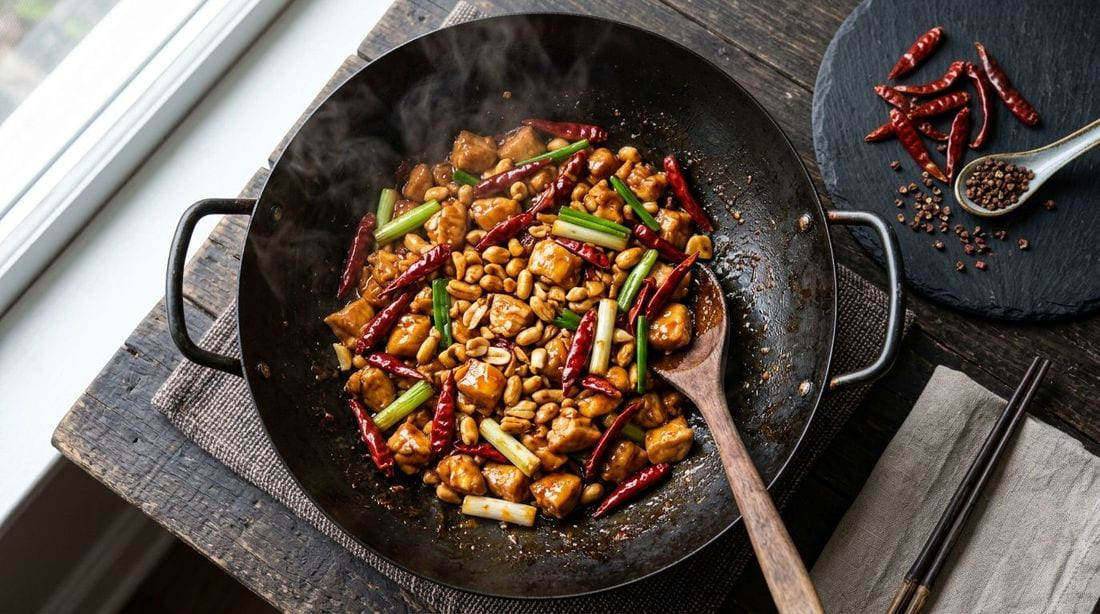
Toast the spice: heat 1 tablespoon of the neutral oil in a wok or large skillet over medium-high heat. Add the Sichuan peppercorns and dried chilies and stir 20–30 seconds until fragrant and the chilies darken by a shade — do not let them blacken, or the dish turns bitter. If you want a milder meal, fish the peppercorns out here and leave the chilies for flavor.
Sear the chicken: raise the heat to high and add the chicken in a single layer. Sear undisturbed for 2–3 minutes until deeply golden underneath, then stir-fry 2–3 minutes more until the pieces are browned on all sides and just cooked through.
Bloom the aromatics: push the chicken up the side of the wok, add the garlic, ginger, and scallion whites to the center, and stir 30 seconds until fragrant. Toss to combine.
Glaze and finish: give the sauce a quick re-stir and pour it into the wok. Toss constantly for 1–2 minutes as it bubbles and thickens into a glossy glaze that clings to every piece. Pull the wok off the heat and stir in the peanuts and scallion greens — they stay crunchy and bright that way. Serve immediately over steamed rice.
Tips for Success
- Do not skip the velveting, and do not short the ten minutes. That little swirl of cornstarch, soy, and wine is what keeps quickly cooked chicken juicy instead of rubbery — the starch forms a shield that slows moisture loss at high heat. Even five minutes makes a visible difference; a whole ten makes the dish.
- Sear in a single layer and leave the chicken alone for the first couple of minutes. Crowded or constantly flipped chicken steams gray instead of browning. If your wok or skillet is small, cook the chicken in two batches — the golden, crisp-edged pieces are half the point of kung pao.
- Treat the chilies as seasoning, not food. The dried chilies perfume the oil and bring the classic fiery warmth, but biting into a whole one is a spicy surprise no one asked for. Breaking them in half before frying releases more heat; leaving them whole keeps it gentle. And a whole Sichuan peppercorn will numb your mouth for a good minute — eat around them if the tingle is not your thing.
- Stir the peanuts in off the heat, always. The sauce is already thick when it leaves the wok; dumping the peanuts in earlier just makes them soggy. Tossed in at the end, they stay shatter-crisp through the whole bowl.
Frequently Asked Questions
Is kung pao chicken very spicy?
As written it is warm and tingly rather than face-melting — the Sichuan peppercorns numb more than they burn, and the dish leans sweet-sour overall. To dial the heat up, halve a few chilies so their seeds reach the oil, or add a pinch of chile flakes with the aromatics. To dial it down, use 6 chilies instead of 12 and leave them whole; you will get the aroma with barely any heat.
Can I use chicken breast instead of thighs?
Yes — just watch the timing. Breast cooks faster and dries out faster, so sear it only until just cooked through (about 4 minutes total after the undisturbed sear) and pull the wok off the heat the moment the sauce clings. The velveting matters even more for breast meat; do not skip it.
What can I substitute for Sichuan peppercorns or Chinkiang vinegar?
Chinkiang black vinegar is the closest thing the dish has to an irreplaceable ingredient — it has a malty, almost balsamic depth that plain rice vinegar lacks. In a pinch, use rice vinegar plus a tiny splash of balsamic. Sichuan peppercorns have no true substitute (that numbing tingle is unique), but a quarter-teaspoon of Chinese five-spice in the sauce gets you cousin flavors, and omitting them entirely leaves you with a very good spicy chicken — just without the tingle.
How do I store and reheat leftovers?
Refrigerate in an airtight container for up to 3 days — the flavors actually meld overnight. Reheat in a hot wok or skillet with a splash of water to loosen the sauce, or in the microwave in short bursts. The peanuts will soften; revive them by stirring in a handful of fresh roasted peanuts after reheating.
Affiliate disclosure: this page contains affiliate links. If you buy equipment through them, Cuisinety earns a small commission at no extra cost to you — it keeps the site free. Picks follow the same research-backed standards as our gear guides. Read ourfull affiliate disclosure.
Browse All Recipes →
Love this recipe? Pin it!
Save it to your Pinterest board so you can find it later.
Pin this Recipe