Journal · Trending · By Amira
Ingredient Spotlight: How to Use Olive Oil, Garlic and Spices Better
Olive oil, garlic, and spices decide how your food tastes before the main ingredient matters. Here is how to choose, cut, and bloom each one properly.
 cuisinety
Journal · Trending · By Amira
Olive oil, garlic, and spices decide how your food tastes before the main ingredient matters. Here is how to choose, cut, and bloom each one properly.
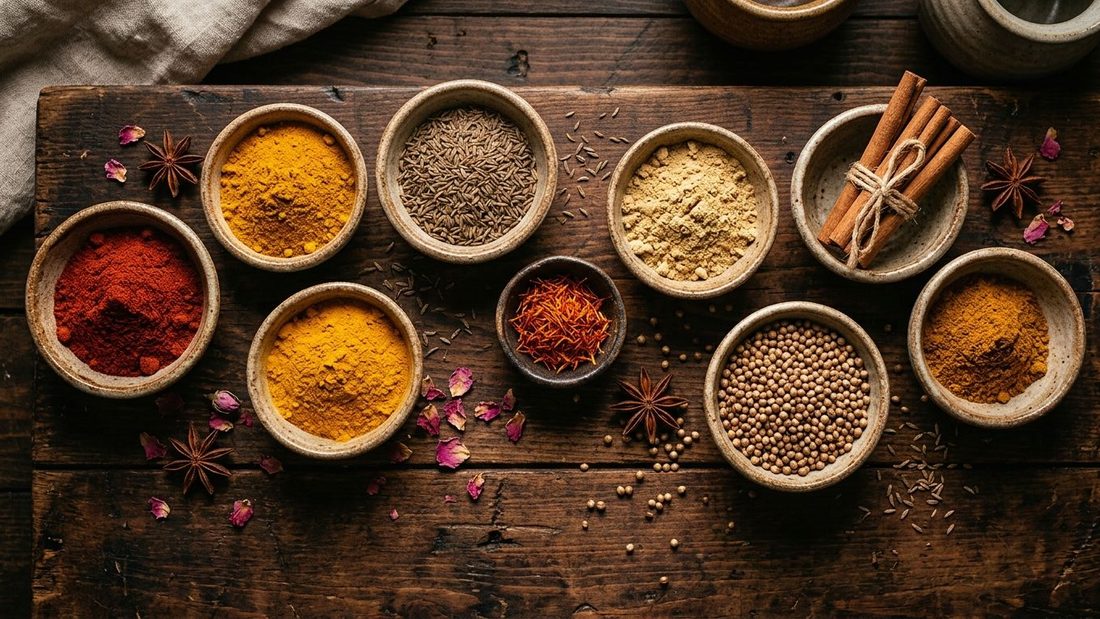
Ask a good cook what separates their food from everyone else's and they rarely name the protein. They name the fat they cooked in, how the garlic was cut, and when the spices went into the pan. These three ingredients are the operating system of savory cooking; the chicken, the beans, the vegetables are the applications.
Most home cooks use all three every day and barely think about any of them: the same oil for everything, garlic minced on autopilot regardless of the dish, spices stirred in whenever. Each habit quietly costs flavor, and the fix is not more ingredients. It is a handful of small decisions made deliberately.
This is a technique piece, not a shopping list. We already have separate guides to the Moroccan spices list and spice storage; here we focus on the moves: how to deploy olive oil, garlic, and spices so they actually show up in the finished dish.
The internet has terrified a generation of cooks away from cooking with extra virgin olive oil, usually by quoting a smoke point around 350F. That number is badly outdated. Good extra virgin olive oil typically smoke-tests between 375 and 405F, and refined olive oil lands closer to 465F, while everyday sauteing happens at 300 to 375F. You are almost never as close to the edge as the meme suggests.
The real reason to split your oils is flavor economics, not safety. Extra virgin olive oil is expensive precisely because of its volatile, peppery, fruity compounds, and those are exactly what dulls under sustained high heat. Push a $16 bottle through a hard sear and you mute what you paid for. Refined olive oil and neutral oils trade away flavor for stability and price.
So the rule is a simple test: will you taste the oil in the final dish? If yes, it earns the extra virgin. If the oil is just a heat-transfer medium inside a heavily spiced braise, the regular bottle does the same job for a third of the cost.
Keep two olive oils within reach. The everyday bottle, refined or inexpensive extra virgin, is for the pan: sweating onions for shakshuka, softening the base of a chickpea curry, frying the eggplant for zaalouk. Two to three tablespoons, medium heat, no anxiety.
The finishing bottle, your best extra virgin, never sees high heat. It goes on after cooking: a teaspoon drizzled over a bowl of lentil soup, a thread of it on hummus, a spoonful stirred into zaalouk just before serving, or pooled under slices of grilled bread. Finishing oil works because its aromatics are intact. Heat them and they are gone; that is the whole trade.
Protect the investment: buy oil in dark glass, store it away from the stove, and treat the opening date like a countdown. An opened bottle is at its best for three to six months, not three years. Rancid oil will not hurt you, but it will quietly flatten everything it touches, including your finishing drizzles.
Every cut of garlic is a different ingredient. Breaking more cell walls releases more of the enzyme-driven compounds that make garlic sharp and pungent. A whole smashed clove is mildest and slowest to release; thick slices are gentle and sweet; a fine mince is assertive; a grated or pasted clove is the loudest thing in the pan and can turn bitter fast.
That spectrum is a dial for matching garlic to cook time. Whole smashed cloves survive long braises and infuse gently, which is why they belong in a tagine or a pot of beans. Slices take two to three minutes of sauteing without crossing into burnt. Minced garlic has roughly a minute of grace over medium heat before it browns and turns acrid. Paste and grated garlic are for raw or near-raw uses: dressings, marinades, the final minute of a pasta.
Match the cut to the clock and garlic stops burning. If a recipe says to saute garlic and onions together for ten minutes, the garlic should be sliced, not minced. If it goes in for the last thirty seconds, mince it and get the full hit. Cooks who say their garlic always burns are usually using one cut for every job.
Jarred minced garlic is pre-blanched in citric acid, which is why it tastes milder and faintly sour. It is not poison; it is a compromise. Use it in long simmers, braises, and tomato sauces where its flatness disappears, and use roughly twice the quantity the recipe asks for. Do not use it where raw or lightly cooked garlic is the point: aioli, garlic bread, or a quick noodle stir-fry.
The green germ in the center of a clove is the embryo, and in mature cloves it carries bitterness. Slice or crush the clove, and if the germ is large and green, flick it out with a knife tip. Small, pale germs are not worth the surgery. More important is clove age: a wrinkled, waxy-yellow clove has lost most of its punch no matter how you cut it.
And the timing rule that fixes most garlic failures: garlic goes in when the onions are already translucent, not at the start. Give it thirty seconds of stirring with the next ingredient standing by; the moment it smells fragrant, the liquid, tomatoes, or protein goes in. Garlic's window is short, and having the next step ready is the difference between fragrant and bitter.
Bloom in fat is the workhorse. Add ground spices to hot oil, usually after the onions are soft, and stir for thirty to sixty seconds until the kitchen smells like the spice aisle. Fat dissolves the aromatic compounds that water cannot reach, which is why blooming paprika and cumin in oil is the difference between a flat chili con carne and a deep one. It is also the entire engine behind a proper chicken karahi or shakshuka base.
Toast dry for whole spices. Cumin seed, coriander seed, fennel, and peppercorns go into a dry pan over medium heat for one to two minutes, shaking, until they smell nutty and the kitchen notices. Then grind them. Dry toasting drives off raw, hay-like notes and wakes up the oils inside the seed. This is the move for the cumin and coriander in falafel or a chana chaat, and it costs two minutes.
Bloom in liquid for long cooks. When a dish simmers for an hour or more, hardy spices can go straight into the liquid, where they hydrate and release slowly: cinnamon and cardamom submerged in a biryani pot, ginger and turmeric whisked into the broth of harira, ras el hanout stirred into the sauce of a lamb tagine. For long timelines, liquid blooming extracts evenly without any risk of scorching.
Start: whole, hardy spices go in first, with the fat. Bay leaf, cinnamon stick, cardamom pods, whole cumin seed, cloves. They need ten minutes or more to give up their flavor and are nearly impossible to burn, so they ride from the very beginning of the dish.
Middle: ground spices go in right after the onions, with or just before the garlic, bloomed in the fat for under a minute. Then liquid goes in immediately, which stops the bloom from scorching. This is the single highest-impact timing habit in home cooking: ground spices want heat and fat briefly, then moisture.
End: delicate things go in last or off the heat. Freshly ground black pepper, dried herbs, chile flakes, and anything ground fresh loses its top notes to long simmering. Fresh herbs like cilantro and parsley go in at the end or on top, always. And since we cover storage fully elsewhere, one line here: whole spices hold their power for years, ground ones for months. Buying whole and grinding in the pan is the cheapest flavor upgrade in the drawer.
The bloom test. Make our shakshuka, but change one variable: heat three tablespoons of olive oil, soften one diced onion, add three sliced garlic cloves for one minute, then add two teaspoons each of paprika and cumin and stir for exactly forty-five seconds before the tomatoes go in. Compare it to your usual method. The difference is what blooming buys you.
The finishing drill. Cook a pot of lentil soup or a batch of hummus as usual, then portion it into bowls and drizzle one teaspoon of your best extra virgin olive oil over each. Taste a spoonful from the pot first, then from the bowl. That peppery lift on top is why the finishing bottle exists, and it takes ten seconds.
The garlic clock. Cook our creamy garlic pasta and cut the garlic two ways: mince half a head for the thirty-second bloom in butter, and slice the rest to cook low and slow without browning. Watch how the minced portion goes sharp and loud while the slices go sweet and round. Same ingredient, same dish, two completely different results. That is the lesson: these three ingredients are not seasonings you add. They are techniques you perform.
These recipes pair with this article — make them tonight:
Advertisement