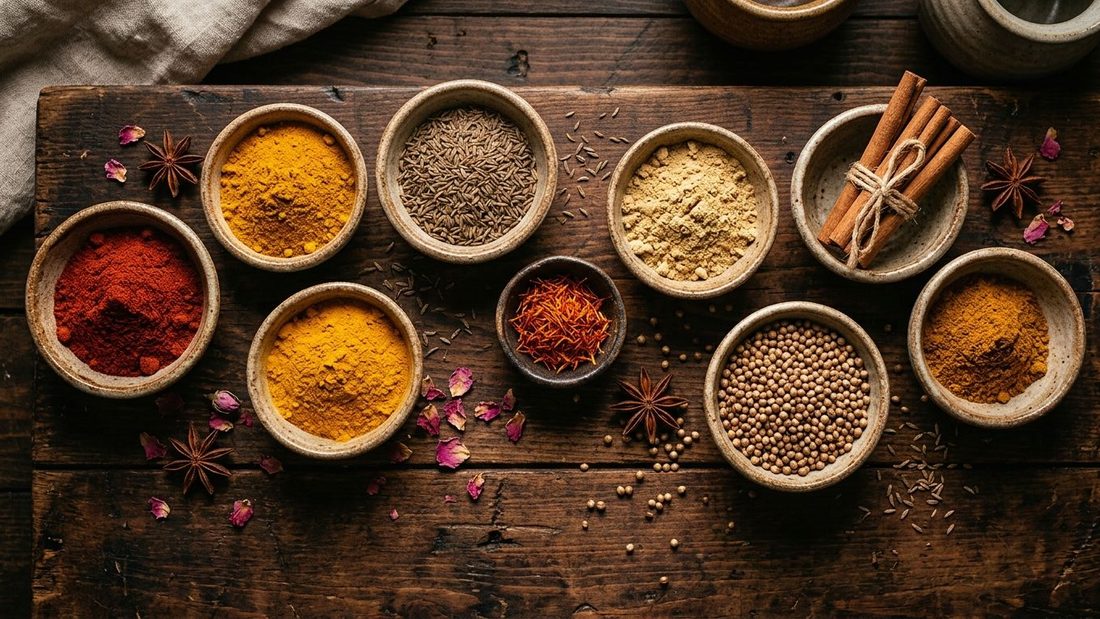
Start here: the ten that matter
People assume Moroccan cooking needs a wall of exotic ingredients. It doesn't. The cuisine is built on a short list of things used constantly, in different combinations — get those right and you can cook most of the Moroccan recipes on this site without another shopping trip. The trick is knowing which items carry real weight and which ones are decoration.
This guide walks through the ten ingredients I'd buy first, in rough order of importance. For each one you'll get what it does, what to look for, what to skip, how to store it, and the recipes where it earns its keep. No specialist equipment required, and nothing here should require a trip outside a well-stocked supermarket — though a Middle Eastern or North African grocer will save you money on several of them.
One honest note before we start: good saffron is the only genuinely expensive item on this list, and it's optional at the start. Everything else costs pocket change relative to how many meals it unlocks.
The spice shelf: ras el hanout, saffron, cumin, paprika
Ras el hanout is the blend that makes food taste instantly Moroccan — a warm, layered mix that typically runs from a dozen to dozens of spices depending on the maker. Buy it in small quantities from a spice shop or a brand with real turnover, because the complex top notes fade within months of grinding. Skip anything sold in oversized bulk tubs; you'll toss half of it. It's the backbone of my lamb tagine with prunes and works rubbed onto chicken before roasting.
Cumin is the workhorse you'll reach for weekly. Earthy, slightly bitter, essential in kefta, zaalouk, and virtually every tomato salad and vegetable dish. Buy whole cumin seeds and grind them if you can — the difference against stale pre-ground is dramatic — but honestly, well-turned-over pre-ground cumin is fine. What to look for: a recent roast date or a shop that moves stock fast.
Paprika brings the red — sweetness and color, not heat, in most Moroccan cooking. Look for deep brick-red, not brown; brown paprika is old paprika. And saffron, the optional splurge: a pinch bloomed in warm liquid turns a dish from good to memorable, especially with fish and in celebratory couscous. Skip saffron that costs less than a few dollars per gram — at that price it's dyed safflower, not saffron.
The quiet backbone: ginger, turmeric, cinnamon
Ground ginger and ground turmeric work as a pair in savory Moroccan cooking — this is the combination that seasons the broth in harira soup and seven-vegetable couscous. Ginger gives warmth with a clean edge; turmeric gives color and a faint bitterness that rounds out richer dishes. Neither is meant to dominate. Buy small tins, and replace them every six to twelve months, because both go woody and dull with age.
Cinnamon in Moroccan food is not the baking spice you grew up with. It goes into savory tagines — the classic pairing is lamb with prunes, where cinnamon and a little sugar build a glossy sauce — and into sweet pastries like chebakia. Use Ceylon cinnamon if you can find it; it's more delicate and floral than cassia, which suits the cuisine better. A whole stick dropped into a simmering pot is more forgiving than powder and lasts for years.
None of these three is glamorous, and that's the point. If your Moroccan dish tastes somehow flat even with ras el hanout in it, the missing depth is almost always one of these quiet spices, added in modest amounts early in the cook.
The preserved row: preserved lemons, olives, orange blossom water
Preserved lemons are the signature move of the Moroccan pantry — lemons cured in salt until the peel turns soft, mellow, and intensely lemony without raw acidity. The rind is the part you use, minced into tagines, salads, and chicken dishes; my chicken tagine with preserved lemon leans on them almost entirely. You can make your own with lemons, salt, and a jar — it takes about four weeks — or buy a jar, which is what I'd do your first month. Skip any brand with preservatives or spices already added; you want lemons, salt, and juice, nothing else.
Olives appear twice: as a cooking ingredient and as a garnish. For cooking, look for firm green olives (often labeled for tagine use at Moroccan grocers); the saltiness seasons braises directly. Rinse them if they're very salty. Skip olives packed in vinegar-heavy brine — the sharpness fights the dish instead of joining it.
Orange blossom water is the fragrance switch for Moroccan sweets and drinks. A teaspoon transforms chebakia syrup, pastries like kaab el ghazal, and even glasses of mint tea on special occasions. It's potent — more is not better. What to look for: pure distillation, short ingredient list, dark glass bottle. Skip anything that smells soapy or artificially sweet when you open it.
The base: couscous, and what to skip
Fine or medium couscous rounds out the ten. It's the canvas for the Friday couscous tradition and one of the fastest real dinners in any cuisine — five minutes of steaming or rehydrating and it's ready. Buy plain semolina couscous, not the boxed instant versions flavored with a seasoning packet; that packet is exactly the kind of shortcut that makes people think Moroccan food tastes flat. The recipes on this site show you how to season the couscous itself.
Now the skip list, because it saves money and shelf space. Skip pre-mixed "tagine seasoning" packets — they're mostly salt and paprika, and you now own better versions of everything inside. Skip saffron threads at bargain prices, as mentioned. Skip "Moroccan spice blend" duplicates: once you have ras el hanout plus the individual spices above, you can build any blend yourself in seconds. And skip smen (aged clarified butter) at the start — it's wonderful but niche, and you'll know when you need it.
One more thing not to buy yet: a tagine pot. A heavy Dutch oven with a lid cooks every tagine recipe on this site perfectly well. Get the pantry right first; equipment can wait until you're hooked.
Storage, and where each ingredient earns its place
Storage rules are simple but strict. Spices live in airtight tins or jars, away from the stove's heat and light — a drawer beats a rack mounted above the cooktop every time. Ground spices keep their best character for six to twelve months; whole spices and cinnamon sticks last years. Preserved lemons keep in their brine in the fridge for a year or more, olives keep refrigerated in their brine, and orange blossom water keeps for years in a dark bottle. Write the purchase month on the label — future you will thank present you.
Here's where the ten earn their keep across the site. Ras el hanout and cinnamon anchor the lamb tagine with prunes; preserved lemons define the chicken tagine with preserved lemon; ginger and turmeric build the broth for harira and seven-vegetable couscous; cumin is the soul of zaalouk and kefta tagine with eggs; orange blossom water finishes chebakia and kaab el ghazal. Ten ingredients, dozens of recipes.
Start with cumin, paprika, ginger, turmeric, and couscous — under twenty dollars total — and cook a vegetable tagine this week. Add ras el hanout and preserved lemons next, then the rest as you go. The pantry builds itself once the cooking starts.