Journal · Trending · By Nadia
Top Trends Shaping Home Cooking in 2026 and How to Ride Them
Six home-cooking patterns shaping 2026 — global pantries, high-protein weeknights, one-pan dinners, and more — with honest framing and practical advice.
 cuisinety
Journal · Trending · By Nadia
Six home-cooking patterns shaping 2026 — global pantries, high-protein weeknights, one-pan dinners, and more — with honest framing and practical advice.
A quick honesty note before the list: nobody outside a market-research firm has hard numbers on what America is cooking, and we are not going to invent any. What we can do is read the patterns that show up repeatedly — in search interest, in what grocery shelves keep expanding, and in what our own readers click and cook. When several signals point the same direction, we call it a trend. When one viral video points somewhere, we call it a fad and skip it.
Each trend below gets the same treatment: what the observable pattern actually is, honest framing of the evidence behind it, and a concrete way to ride it this month. The goal is not to predict the future of food — it is to help you decide which shifts are worth adopting into a real kitchen, with real time limits, before investing anything in them.
The six patterns below all share one useful property: they are habits, not ingredients. You do not need to buy anything exotic to participate in most of them, and every single one maps to recipes that already exist in the tested Cuisinety collection. That is the point — a trend is only worth riding if it makes your weeknight cooking better, not just your feed more current.
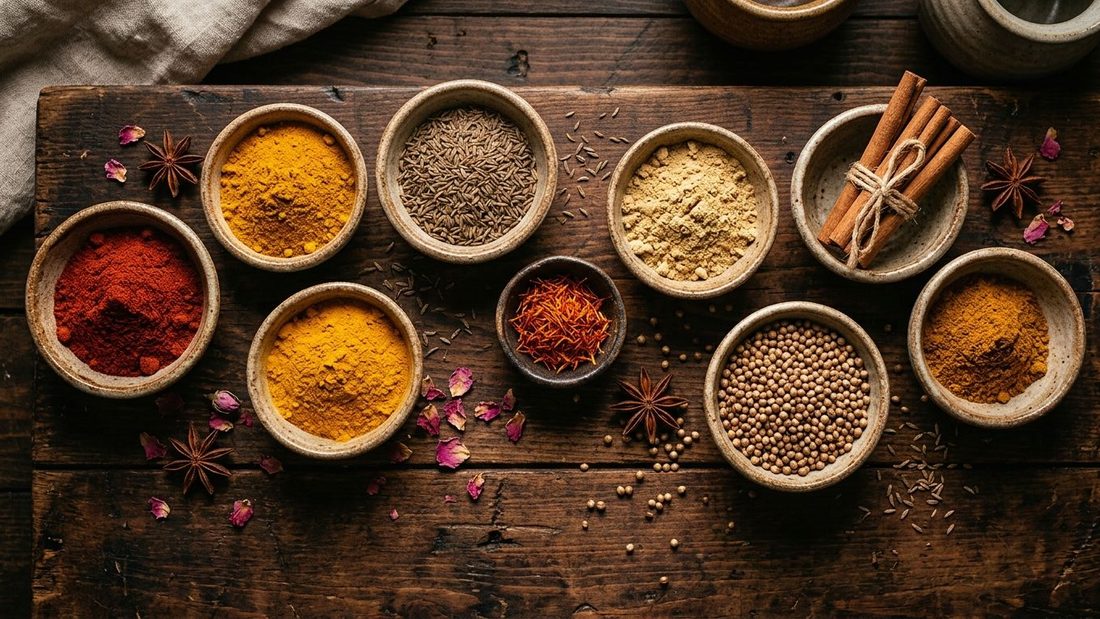
The clearest pattern of the last few years continues into 2026: home cooks are treating international ingredients as everyday staples rather than special-occasion purchases. Search interest and pantry behavior suggest people are no longer cooking 'a Moroccan recipe' once a quarter — they are keeping harissa on the door shelf and reaching for it weekly.
How to ride it: pick one cuisine and stock its three non-negotiables instead of buying one token jar of five different things. For Moroccan, that is harissa, preserved lemon, and a real spice set — our Moroccan Pantry Starter Guide lists the ten ingredients that unlock the whole hub, from the 5-Ingredient Moroccan Tagine to Kefta Tagine with Eggs. For the broader picture, our guide to simple ingredient swaps shows how a single jar transports dishes you already cook.
The payoff is compounding. Every new bridge ingredient multiplies the number of dishes you can make without another shopping trip — the same chicken thighs become Moroccan on Tuesday and Korean-glazed on Thursday.
Protein-forward cooking has shifted from gym culture to general weeknight culture. The observable behavior: yogurt and cottage cheese keep expanding into new shelf space, legumes show up in more main dishes, and home cooks increasingly ask 'where is the protein' about dishes once framed as light or vegetable-forward.
How to ride it without turning your kitchen into a macro-counting operation: anchor dinner on inexpensive complete proteins and let legumes carry the rest of the week. Lentil Soup and Roasted Veggie Quinoa Bowl show how far lentils and quinoa go; Chana Chaat and Hummus make chickpeas a snack and a main; Daal Chawal remains one of the most satisfying high-protein-plus-rice dinners anywhere. For meat nights, seek out cuts that braise — Beef Nihari and Beef Keema deliver serious protein from the cheapest cuts in the case.
One practical note: protein-forward does not mean flavor-backward. The tested recipes above season aggressively precisely because lean ingredients need it. Skimp on the spices and the trend collapses into sad chicken breast.
The one-pan appetite keeps growing, and the reason lives in lived experience rather than data: busy households have concluded that a 30-minute recipe with 45 minutes of dishwashing is not a 30-minute recipe. Readers increasingly scan for the cleanup footnote before the ingredient list.
How to ride it: build a rotation of genuinely one-vessel dinners and guard it against recipes that quietly dirty four bowls on the side. Our Easy One-Pan Chicken and Vegetables is the honest version — protein and vegetables in one pan, one wash. Chicken Fried Rice is a second-dinner-of-the-week workhorse because it uses yesterday's rice and one wok. Chicken Karahi does the same job with bolder flavor: seared chicken, tomatoes, and ginger in a single pan, on the table faster than delivery.
The real skill here is choosing recipes whose one-pan claim survives contact with your kitchen. If a 'one-pot' pasta asks you to boil pasta separately, it has lied to you — cook the starch in the sauce or move on.
Full-on home fermentation — sourdough empires, countertop koji — has cooled from its peak, but the flavor signature of fermentation has gone permanently mainstream. Miso in salad dressing, kimchi next to eggs, gochujang in glazes, yogurt marinades, sour notes in place of heavy cream: these flavors now show up in ordinary weeknight cooking, and the pantry-shortcut version is what sticks.
How to ride it: keep two fermented workhorses on hand, a savory one and a tangy one. Miso and gochujang cover the savory-funky lane (see Beef and Broccoli for the soy-and-garlic version of depth, or stir miso into butter for roast chicken). Plain yogurt covers the tang lane — it is the base of the marinade in Chicken Tikka, the cooling side for Birria Tacos and Chicken Biryani, and the body of a Mango Lassi. Fermented-adjacent pickles and quick-pickled onions round out the set.
This trend rewards small commitments. One jar of miso and a tub of yogurt will carry you further than any fermentation starter ever will.
A quieter shift, visible mostly in how people talk about cooking online: readers increasingly cook the same verified recipe repeatedly instead of collecting new ones they never make. The observable pattern is the rise of 'tested' and 'trusted' as selling points, comment sections that read like lab reports, and a backlash against untested recipes that collapse in real kitchens.
How to ride it: build your own short list of recipes you have cooked three times and know cold, then extend them deliberately — the technique our meal-planning guide turns into a full weekly system. Start with dishes that reward repetition and scale: Shakshuka takes fifteen minutes once you know it by heart; Moroccan Harira Soup improves as you learn its rhythm; Chicken Paprikash becomes a weeknight once you trust the paprika bloom. The Cuisinety collection is built around this — every recipe is tested in a real kitchen with known timings, which is the entire premise of cooking from a tested pool.
The bonus nobody mentions: recipes you know by heart are the fastest ones you own. Familiarity beats novelty on a Tuesday.
The zero-proof aisle keeps expanding and home entertaining has followed: hosts increasingly offer a real non-alcoholic drink option that is not soda, and weeknight cooking increasingly pairs with something brighter than water. Search interest and shelf behavior suggest this is a durable habit rather than a dry-January blip — bitter, herbal, and fruit-forward drinks are being treated as pairings, not consolation prizes.
How to ride it cheaply: three bottles cover most of the territory — sparkling water, a tart juice (pomegranate or cranberry), and fresh herbs or ginger. From there, the tested recipes in our drinks collection do the rest: Watermelon Mint Cooler for summer tables and taco nights, Orange Carrot Ginger Juice alongside rich braises where you want the acidity to cut the fat, Berry Beet Smoothie when the drink should carry real substance, and a proper Moroccan Mint Tea to end a tagine dinner the way it deserves.
The pairing logic is the same one sommeliers use: fat wants acid and heat wants sweet-cooling. Once you see it that way, matching a drink to your dinner is a thirty-second decision, not a performance.
One more pattern, less loud than the others: home cooks are spending attention on technique rather than equipment. The gear arms race has plateaued, and the observable energy has moved toward fundamentals — how to read a recipe before cooking it, how to store spices so they stay potent, how a tagine actually works.
How to ride it costs nothing: pick one fundamental per month and drill it inside dishes you were cooking anyway. October's fundamentals could be our guides on reading a recipe like a cook and spice storage and shelf life; the tagine technique deep-dive teaches low-heat braising you can transfer to any stew from Goulash to Coq au Vin.
That is the through-line of every trend above, honestly framed: none of them require a bigger budget. They require a pantry with two or three new jars, a shortlist of recipes you trust, and a willingness to cook the same good dish twice. That has always been the real trend — 2026 is just the year more people noticed.
These recipes pair with this article — make them tonight:
Advertisement