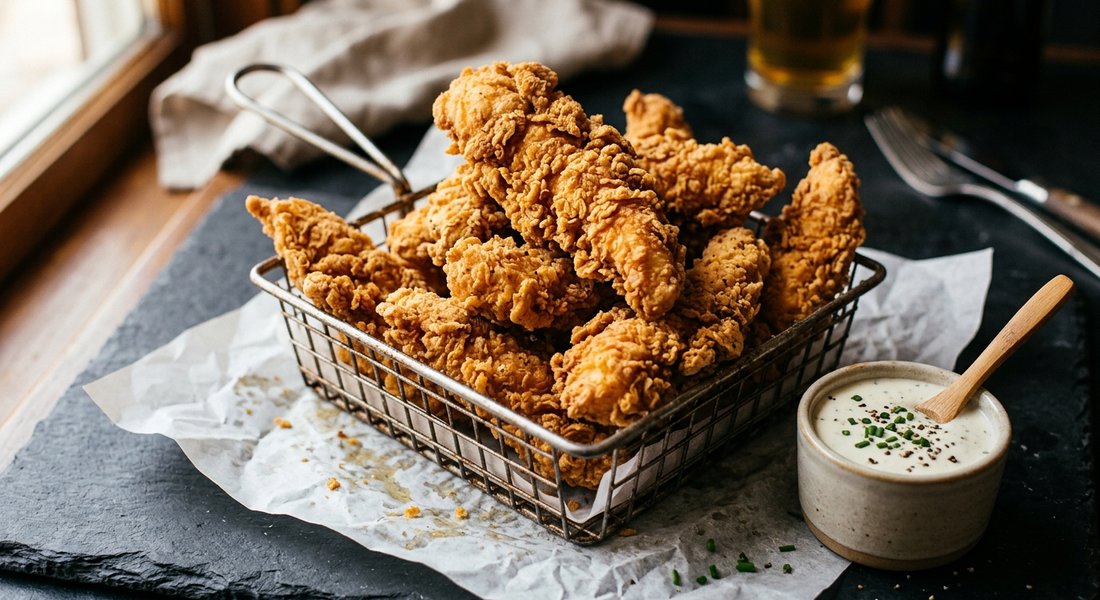
Why chicken tenders are suddenly everywhere
Google Trends in Australia lit up this week with a sharp spike in searches for "KFC recipe change chicken tenders" — the kind of sudden, concentrated interest that usually means something changed on the menu and people noticed fast. When a fast-food chain tweaks a recipe as beloved as its tenders, the internet immediately splits into two camps: those convinced it's better, and those swearing the old version was peak chicken.
It's a pattern we see constantly: a recipe change lands, word-of-mouth (and a few outraged TikToks) do the marketing, and search volume follows. The traffic signal here is real — a dedicated spike from Australia's Google Trends feed, not background noise. And honestly, the curiosity makes sense. A good tender is a very specific thing: shatteringly crisp crust, juicy strip of chicken, seasoning that hits on the first bite.
The good news? This is one of the most copyable recipes in fast food. With buttermilk, seasoned flour, and a thermometer, you can make tenders at home that most people would rank above the drive-thru version.
How to make seriously crispy tenders at home
Start with the brine. Soak chicken tenderloins in buttermilk with a teaspoon of salt, a splash of hot sauce, and a pinch of garlic powder for at least 4 hours (overnight is better). This is the step everyone skips — it seasons the meat through and tenderizes it, so the inside stays juicy while the outside fries to a crunch.
For the crust, use a double dredge: seasoned flour (salt, black pepper, paprika, garlic powder, a little cayenne), then a quick dip back in buttermilk, then flour again — pressing firmly so you get craggy, ridged bits. Those irregular pieces are what make fried chicken crust taste like fried chicken crust. If you want extra crunch, replace a third of the flour with fine panko.
Fry at 175°C (350°F) in neutral oil, no more than four tenders at a time — overcrowding drops the oil temperature and that's exactly how you end up with greasy, soggy coating. About 3–4 minutes per side, then drain on a wire rack, never paper towels. The most common mistakes: skipping the brine, flour that's too fine (no texture), and a thermometer-less fryer drifting 20 degrees too cool.
Making tenders part of your week
A big batch of tenders covers three meals easily. Night one: classic tenders with a honey-mustard or garlic-aioli dip. Night two: slice them into wraps with lettuce, pickles, and a drizzle of hot honey. Night three: chop over a big salad or toss into fried rice for a 15-minute dinner that tastes like takeout.
For a lighter spin, the same brine-and-dredge works in an air fryer at 200°C for about 12 minutes, flipped halfway, with a spray of oil — slightly less shatter, still genuinely crisp.
Whether or not KFC's new recipe wins you over, homemade tenders have one unbeatable advantage: you control the salt, the heat, and the crunch. Make a double batch — they rarely survive the day.