Journal · Trending · By Sofia
Creative Ways to Use Leftovers in Easy Weeknight Dinners
Leftovers are not a reheat problem, they are a design problem. A simple formula turns roast chicken, rice, and vegetables into new weeknight dinners.
 cuisinety
Journal · Trending · By Sofia
Leftovers are not a reheat problem, they are a design problem. A simple formula turns roast chicken, rice, and vegetables into new weeknight dinners.
Reheating is not repurposing. Microwaved lasagna is still lasagna; the goal here is building a new dish that does not announce itself as leftovers. Every successful leftover transformation we tested follows one formula: a savory protein, a starchy carrier, something acidic, and something crunchy. Hit all four and the dish reads as intentional.
The formula in action: shredded roast chicken (protein) folded into quesadillas (starch) with pickled jalapenos (acid) and shredded cabbage (crunch). Or chili spooned over baked potatoes with a squeeze of lime and crushed tortilla chips. Or roasted vegetables and chickpeas over couscous with lemon and toasted almonds. Different cuisines, same skeleton.
The formula works because leftovers fail in predictable ways. Fat renders out and flavors mellow overnight, so the dish tastes quieter than it did on day one. Acid restores brightness, crunch restores texture, and the starch gives the quieter protein a new context where it can lead again instead of being a rerun.
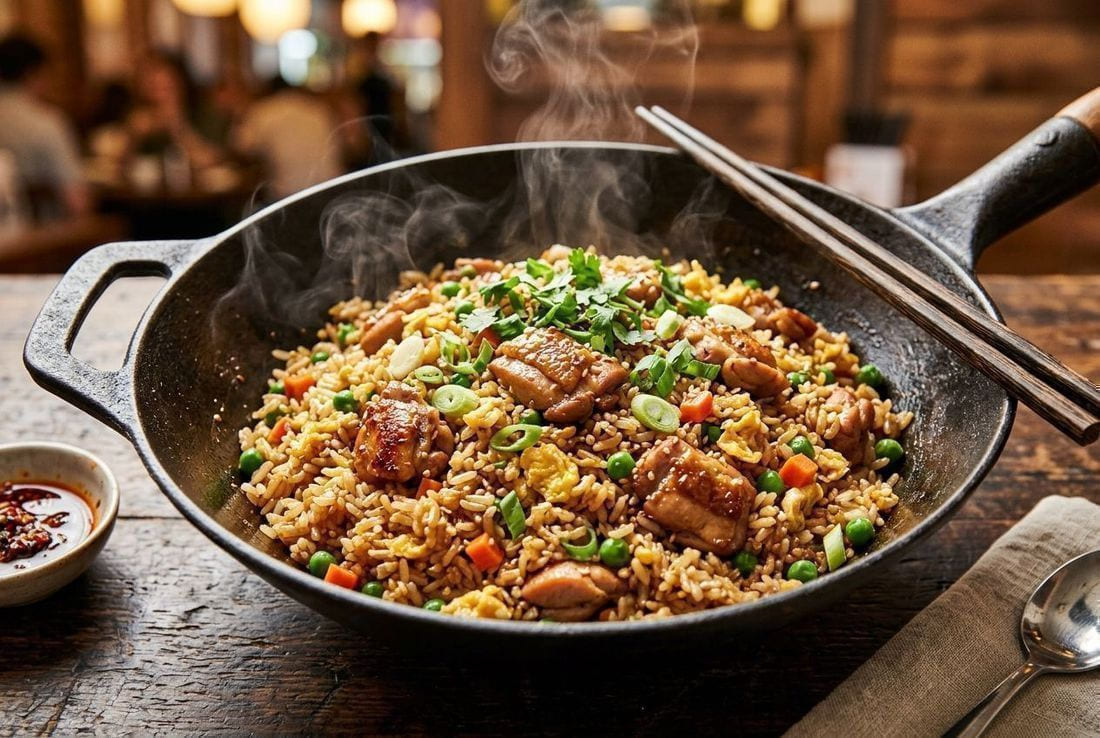
A roast bird is the best leftover purchase in cooking, which is why our lemon herb roast chicken is the base recipe we recommend for leftover planning. First act: dice the meat and make fried rice. Cold cooked rice, two beaten eggs, the diced chicken, frozen peas, and scallions, cooked hard and fast in a wide pan. Our chicken fried rice recipe takes about twenty minutes and tastes better with day-old rice than fresh.
Second act: quesadillas or tacos. Toss shredded chicken with a teaspoon of chili powder, cumin, and a squeeze of lime per cup of meat, pile it onto tortillas with cheese, and crisp them in a dry skillet. The cheese is structural, not decorative: it binds the shreds into a sliceable filling. For tacos, follow the seasoning approach in our beef tacos recipe and it works identically for chicken.
Third act: soup. The carcass is not trash, it is stock. Cover it with water, add an onion half, a carrot, and a bay leaf, and simmer ninety minutes. Strain, then build a soup with leftover diced meat, noodles or rice, and a hard squeeze of lemon at the end. One chicken, three completely different dinners, roughly four dollars per plate.
Rice deserves its own section because it carries a real risk the others do not: Bacillus cereus, whose spores survive cooking and multiply into toxins when cooked rice sits warm at room temperature. Those toxins are not destroyed by reheating. The rule is simple and non-negotiable: spread hot rice on a tray or into shallow containers, get it into the fridge within one hour of cooking, and eat it within a day, two at most.
This matters most for the classic move of leaving rice in the pot or the rice cooker overnight for tomorrow's fried rice. That is exactly the failure mode. Cool it fast, refrigerate it, and it is not just safe but genuinely better: chilled, dried-out grains fry up separate and chewy instead of steaming into mush.
Other starches are friendlier. Leftover pasta becomes a baked casserole with sauce and cheese, or a frittata binding. Cooked potatoes get smashed flat, brushed with oil, and crisped at 425F for twenty minutes, at which point they are a new side dish entirely. Couscous and quinoa reheat cleanly and slot straight into a grain bowl.
If you roast vegetables on Sunday, roast double. Reheated on their own they are sad; rebuilt, they are three different dinners. First: frittata. Whisk six eggs with a splash of milk, fold in two cups of chopped roast vegetables and a handful of cheese, pour into an oiled ovenproof skillet, and bake at 375F for eighteen to twenty minutes until just set. It is dinner, it is lunch tomorrow, and it does not care which vegetables you throw at it.
Second: pasta. Warm the vegetables in olive oil with three sliced garlic cloves and a spoonful of tomato paste, add a splash of pasta water, and toss with short shapes. Roasted eggplant and tomato is minutes away from a zaalouk-style sauce this way. Third: tacos or burrito filling. Chop the vegetables, warm them with cumin and black beans, and serve in tortillas with lime and hot sauce.
The strategic move is that roasted vegetables are deliberately made leftovers. Our roasted veggie quinoa bowl is built for this: cook a full tray even when tonight only needs half. The second half has a standing appointment with a frittata by Wednesday.
The food safety line for cooked leftovers is three to four days refrigerated at 40F or below. Day four is not a suggestion; it is the line. The practical habit that makes the line work: when you put leftovers away, decide their fate immediately. Eat within four days, or freeze on day three without ceremony. Freezing pauses the clock indefinitely, and a flat, labeled freezer bag thaws in an hour in cool water.
Reheat once, all the way through, to 165F. Repeated partial reheating is where texture dies and bacteria get cozy, so portion before reheating rather than nuking the whole container for one serving. Some things genuinely should not get a second performance: cooked rice beyond the window above, cooked seafood, and cream-based sauces and gravies, which both suffer safety-wise and split into something unappealing. Broth-based soups and stews, notably, reheat beautifully several days running.
Label everything with contents and date. Painter's tape and a marker beat memory every time, because the container of mystery chili you find on day five is the one that ends up wasted instead of eaten. First in, first out: new leftovers go behind old ones, and the oldest get eaten or frozen first.
Some recipes are leftovers on purpose. Big-batch braised proteins improve overnight as the spice settles: our chili con carne, carnitas, and birria tacos all taste deeper on day two, and each has a natural second life, from chili over baked potatoes to carnitas quesadillas to birria ramen.
Soups are the same story. Our lentil soup and Moroccan harira both thicken and meld overnight; add a splash of water when reheating and they are better than the first night. Daal and bean stews behave identically, which makes a Sunday pot the cheapest week of dinners you will ever cook.
The complete week looks like this: Sunday, a lemon herb roast chicken, a tray of roasted vegetables, and a pot of rice, cooked deliberately in surplus. Monday is the original meal. Tuesday is fried rice. Wednesday is a frittata. Thursday is chicken soup from the carcass. Four dinners from one cooking session, no two of them recognizable as relatives, and nothing scraped sadly into the trash on Friday.
These recipes pair with this article — make them tonight:
Advertisement